
TL;DR
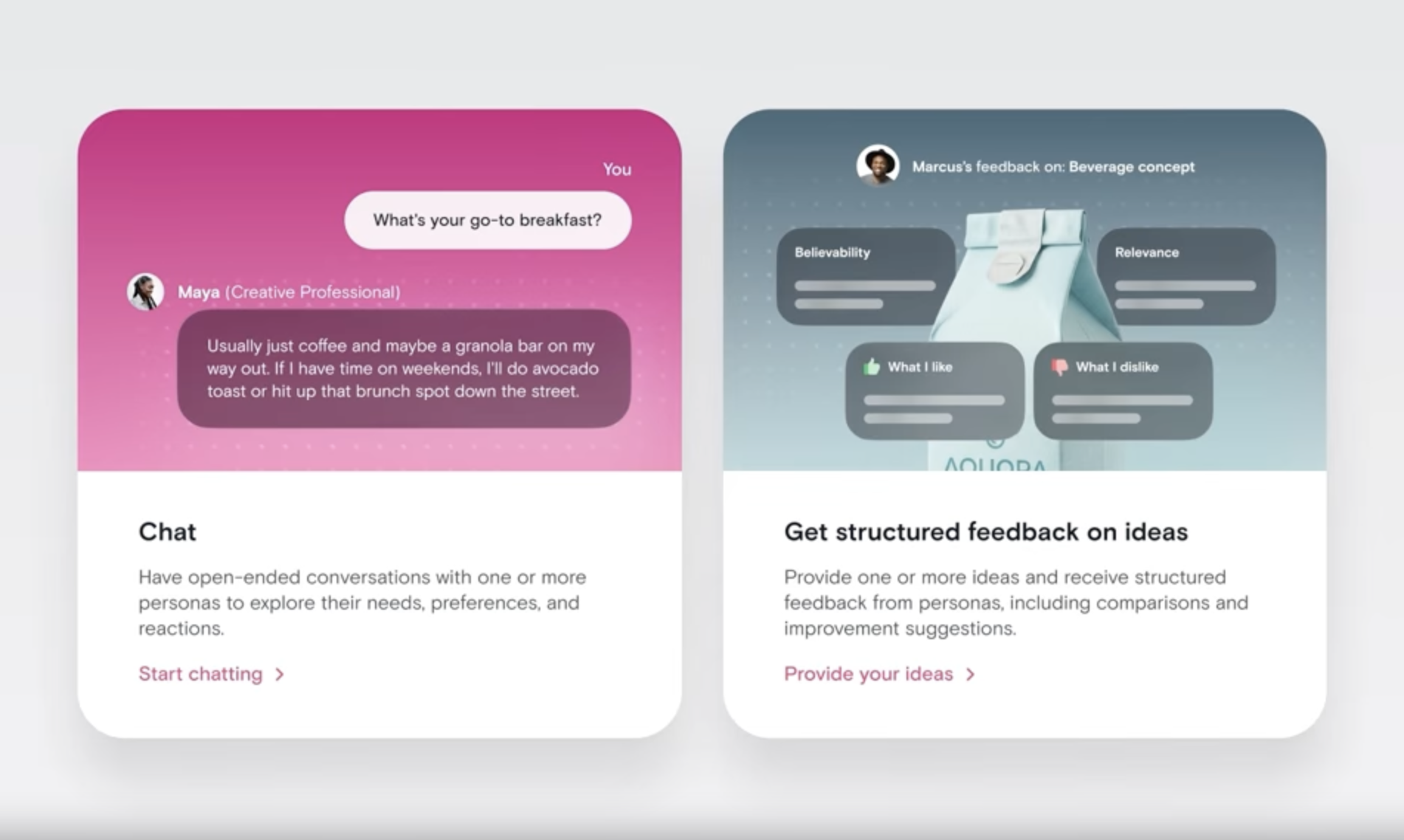
Mastercard VP Francesca Cruz shares 5 tips for scaling AI Personas: bring stakeholders along, use trusted/cited sources, set guardrails on what Personas should answer, keep humans in the loop, and keep Personas "living" with fresh data. She frames it as a first step toward a broader enterprise decision intelligence system.AI personas are quickly becoming one of the most talked-about applications of AI in the insights industry, and for good reason. Done right, they unlock faster decisions, wider access to audience knowledge and more value from the insights that organizations already own. The opportunity is real, but the key is understanding how to responsibly and effectively take advantage of it at scale.
At Quirk’s NY 2026, Brandon Beeken, Director of the US Market at Stravito, sat down with Francesca D. Cruz, VP of Enterprise Consumer Insights at Mastercard to explore how she and her team are developing AI personas for business growth. Drawing from her experience setting up AI personas in different environments, Francesca shared her learnings and what excites her about the potential of AI Personas in insights and beyond.
In this article, we synthesize her advice for insights leaders looking to progress on their AI Personas journey.
Tip #1: Bring your stakeholders along with you
“The most important thing is that we brought people along the journey with us so that they could input and feel like part of the process and ownership,” Francesca says.
At Mastercard, Francesca and her team assembled a cross-functional team to pilot AI Personas. This was to explore the use cases and questions that were relevant to different teams to ensure that they were developing AI Personas in a way that would actually bring business value.
After a couple weeks of piloting, they were able to regroup as a team and determine the different requirements for different teams from there. Their work has shown promising use cases across a variety of areas such as product & positioning, marketing, digital media, as well as data & services.
“We've been leveraging it for naming, for prioritization of messaging and things like that. You can leverage it just to build empathy, get closer to your consumer target. There's so many potential use cases, even as we think about issuers and banks that we work with, and can we marry their personas with our personas and what are the growth opportunities there?”
Tip #2: Use sources you can trust
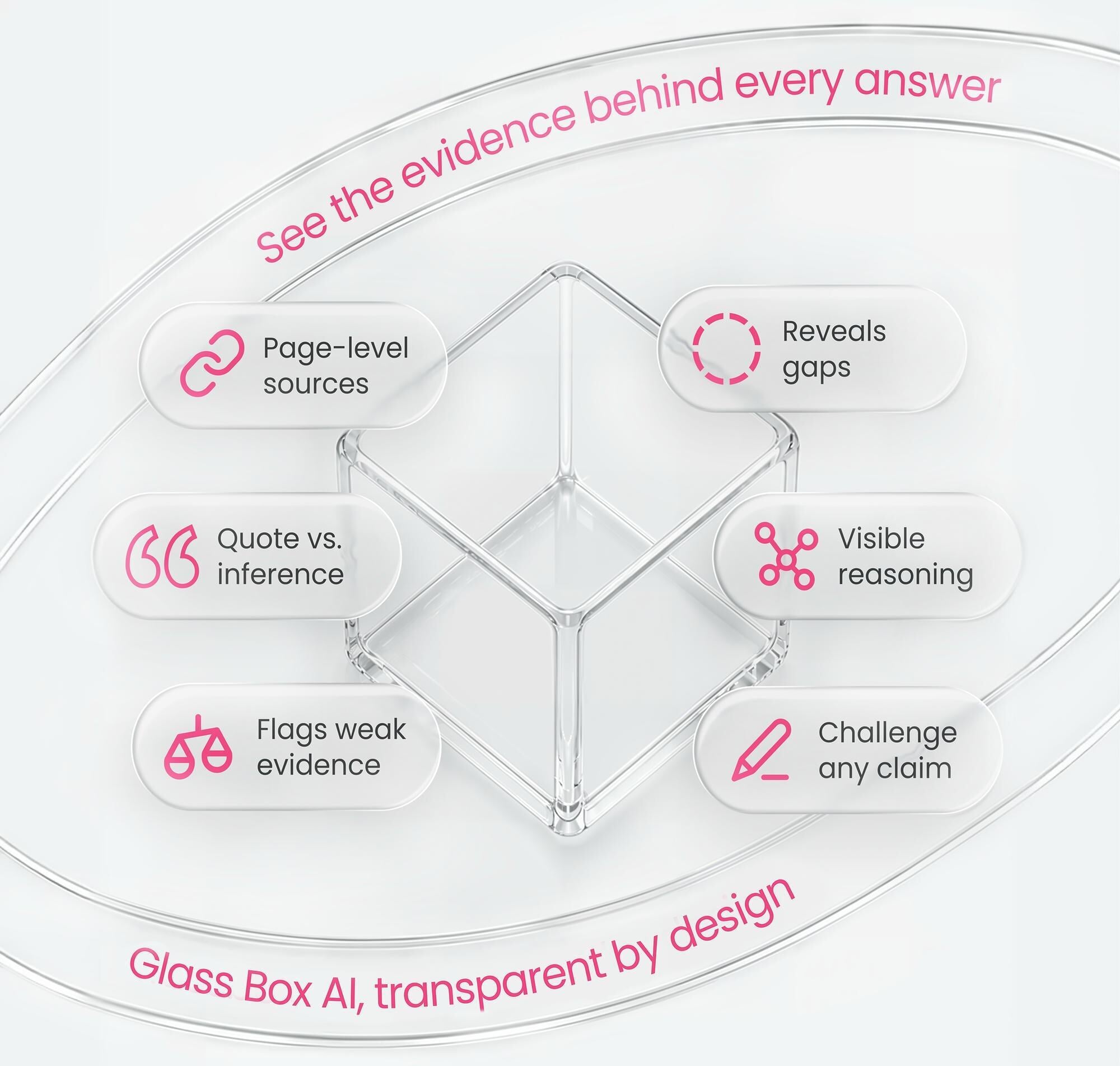
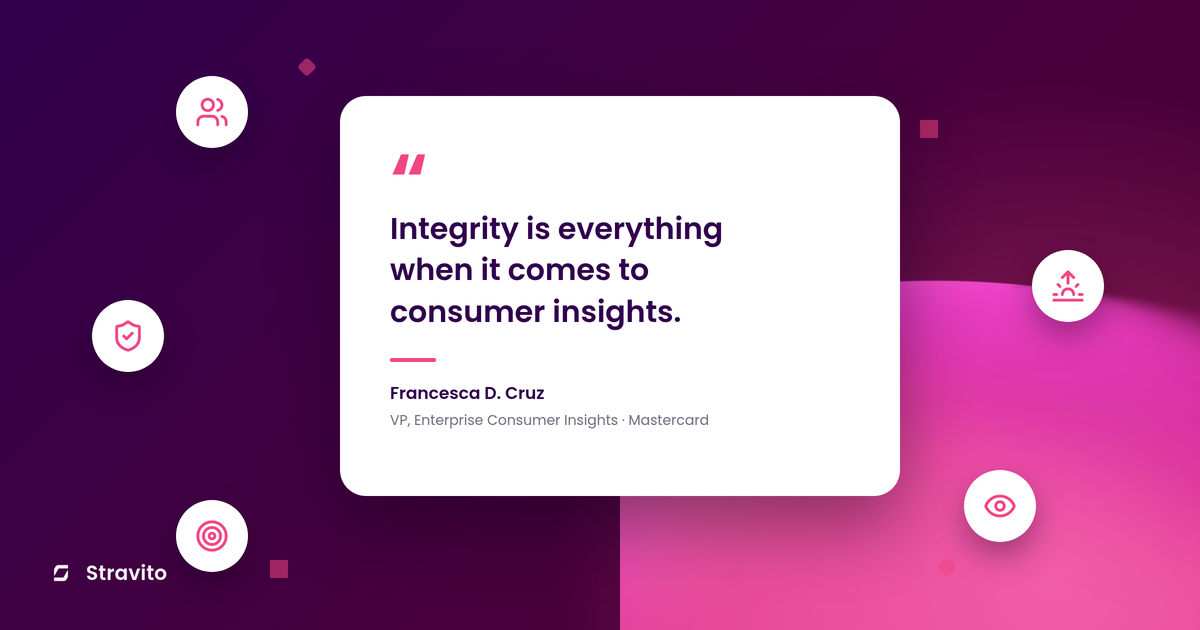
“Integrity is everything when it comes to consumer insights, so you want to be able to stand behind the answers that you provide to your business partners.” For Francesca, this means basing AI Personas fully on Insights Studio, Mastercard’s insights library with Stravito. While she emphasizes that the “right” sources will vary from company to company, she advises using business objectives as a way to decide what sources make sense.
“For us, it’s about using credible sources that also cite the exact source…we can actually tell you which report, which page, and go directly to that page, so you don’t have to wonder if this is actually true or not.”
A trustworthy system also helps to ensure that synthetic personas deliver value across use cases. When asked about potential trade-offs balancing speed and rigor, she answered:
“I just don't think that there needs to be a trade-off. I think that if you have a really sound system that you're working with, you could have both, and you could use them in different use cases.”
Tip #3: Set guardrails
Part of using AI Personas effectively is knowing where to set limits. On the individual AI Persona level, this means building them in a way that ensures that they don’t answer questions they shouldn’t.
“Just because you can ask it doesn't mean that it should answer. So have a think about that because there are questions that are potentially strategy related that you might not want your actual Persona to answer. So have a think about the guardrails that you could put in place so that what it's actually wanting to answer is what it's designed to do.”
On a broader level, it means understanding that AI Personas aren’t going to be a fit for every scenario, especially ones that carry higher risk.
“In my view, it comes down to risk. And for higher risk initiatives, will I say we use AI personas 100 percent of the time? No. It really comes down to testing it out, seeing what works, understanding when it makes sense to use this versus actually doing live consumer research because to me this is not the solution for every single thing we do. It really depends on objectives and use cases, etc.”
Tip #4: Human judgment is essential
“Another thing I would say is to test, test, test, because it's not going to be perfect out the gate, and you have to use your human judgment and keep the human in the loop to do that work so that once you do launch it, it's going to give you the response that it should.”
However, she also explains that when it comes to Personas, it's not about getting a 1:1 match with human studies.
“We're not looking for 100% precision. So if it said 50% [in a human study], not looking for 50 percent [in the AI Persona]; that's just not how we're doing it. What's important is more relative comparisons. And so if we see sort of a pattern, if we see a similar pattern or main test for example, that ranks these three at the top, we want to see something similar in the synthetic or the simulated Personas as well.”
Francesca underscores that insights people are an essential part of setting up AI Personas for success.
“And that's why you also need to have the human in the loop, which is really important to us. Because you could just give access and someone will just be able to tell you the answer based on putting the inputs to the Personas. But the insights person knows the data. They know the consumer. They know what good looks like. They know when they smell something funny. And so that's why the human in the loop matters a lot here.”
Tip #5: Keep them “living”
When it comes to the quality of AI Personas, it’s also crucial to consider the recency of sources, not just their rigor. Francesca and her team are using segmentation studies as a starting point, but they aren’t going to stop there.
“The segmentation is our starting point, but we're going to just continue building that body of knowledge to make the different Personas smarter and smarter so that we can use them and leverage them across the business for growth.”
With the variety of demands placed on today’s insights teams, building AI Personas within the context of a centralized insights intelligence platform like Mastercard’s Insights Studio is key to achieving this. The use of APIs in particular allows them to get reports piped in and keep their knowledge base fresh.
“The other thing that I like about the way that we're doing it is that we don't have to constantly update it with new data and new research, because that becomes very cumbersome," says Francesca.
But keeping AI Personas fresh is also a matter of how they are situated in enterprise workflows.
“I see Personas as living, meaning now that we'll have these Personas across our various audiences, we can stand up AI moderation and set up those feedback loops so we're constantly getting fresher learning and new learning and deepening our understanding about the Personas.”
The vision: Cultivating an enterprise decision intelligence ecosystem
Looking ahead, Francesca sees a lot of potential in AI Personas, with benefits extending far beyond the insights function.
“I do think as an insights function a lot of our job is to make the people around us smarter. We've been a team of 10 in Global Insights, and there's thousands of people at MasterCard so I get very excited about actually giving people access to insights and knowledge at their fingertips so that we're able to make smarter decisions as a company,” says Francesca.
She also sees AI Personas as a core pillar in a future of insights that will be shaped more and more by decision intelligence capabilities.
“Decision intelligence is where this function is headed,” says Francesca.
“Imagine a world where we're building decision systems in the future, and there's an input of AI Personas, an input of brand equity data, an input of other types of data. All of this is helping to feed into a larger enterprise ecosystem that helps us make better decisions, and just to think about insights a bit differently. Right now there's been a lot of talk about different dashboards, and there’s a dashboard for everything. I think in the future, it's going to be much more about a lot of inputs going into one place and using that to help us field decisions.”
⬇️ Get the full story in Mastercard's presentation at Quirk's NYC 2026 ⬇️

See how Stravito can help your team
The most valuable insights aren’t the ones sitting in a repository. They’re the ones teams can quickly find, trust, and apply when decisions matter most.
See how Stravito can help your organization turn knowledge into business impact.


Author