TL;DR:
-
CES signaled a clear shift: 2026 will reward teams that can experiment fast and decide with confidence
-
AI is accelerating insights work, but impact comes from grounding speed in trusted consumer knowledge
-
The role of Insights is evolving from producing research to enabling confident, everyday decisions
-
Insight-anchored AI helps teams pressure-test ideas early, align stakeholders, and act faster with confidence
CES labels itself as the most powerful tech event in the world and has always been a glimpse into what’s coming next. This year, we got to witness it firsthand when we joined Insights Lighthouse at CES.
We were surrounded by conversations happening on and off the show floor: focused discussions about how innovation, consumer insight, and decision-making will actually work in the years ahead.
Our time at CES made one thing clear: 2026 will belong to teams that can experiment faster without sacrificing decision confidence.
AI accelerates experimentation, but only when it’s grounded in insight
Our SVP of North America Sales, Lori Mills, joined an outstanding panel to discuss how AI-augmented insights are helping organizations experiment faster, learn smarter, and turn bold ideas into real innovation.
Throughout the panel, one theme surfaced on repeat: AI is fundamentally changing the pace of insights work, but speed alone isn’t the win.
The most effective teams are using AI to pressure-test ideas earlier, explore scenarios faster, and surface blind spots before committing time, budget, and reputation to the wrong direction.
Across CES, we heard growing frustration with AI tools that:
- Answer one question at a time, with no context or iteration
- Operate outside an organization’s real consumer knowledge
- Prioritize novelty over trust and transparency
The future of AI in insights is about empowering teams to make smarter decisions, faster.
From insight access to decision confidence
This is where the role of Insights itself is evolving.
Insights teams are no longer measured by how much research they produce, but by how confidently the organization can act on it. That requires more than static reports or one-off AI outputs. It requires systems that help teams:
- Explore ideas conversationally
- Align stakeholders around shared evidence
- Bring consumer logic into everyday decisions, not just major studies
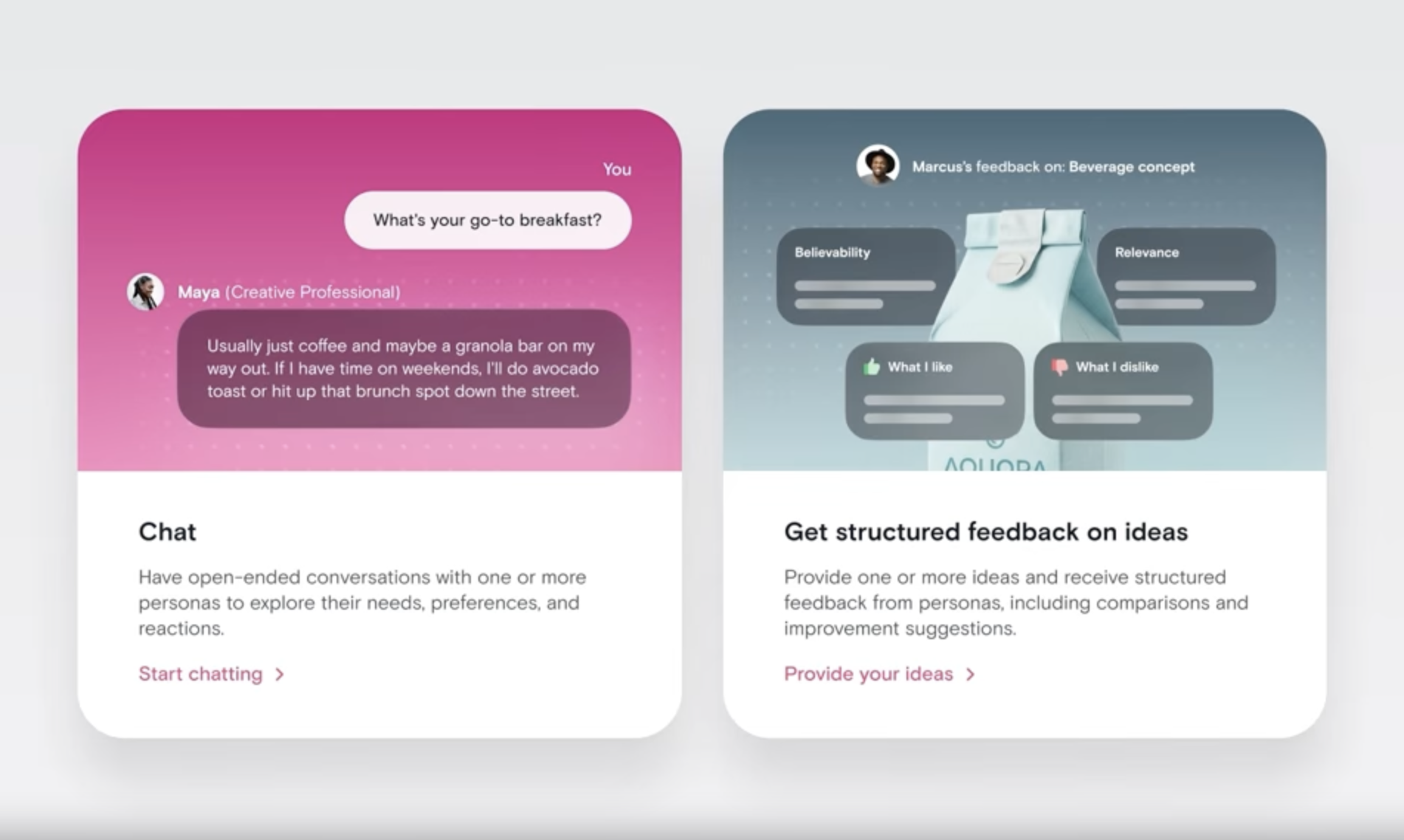
At Stravito, this is exactly why our AI capabilities are built the way they are. Stravito Assistant and AI Personas don’t just retrieve information. They help teams explore, pressure-test, and apply insights with confidence.
By grounding AI in a company’s own insights, segmentation, and research history, teams can experiment faster and stay anchored in reality. Concepts can be stress-tested. Messaging can be refined. Assumptions can be challenged early, when it’s still cheap to change direction and confidence is forming.
That’s not automation for its own sake. That’s insights intelligence, and it’s becoming table stakes for 2026.
***
Want to see how Stravito AI Personas help teams connect the dots between research and real decisions? Book a demo.
And if you want more stories and insights like this (plus event invites and early content drops), join The Insighter’s Club.