
TL;DR
- What it is: MCP (Model Context Protocol) is an open standard that lets AI tools like ChatGPT, Claude and Microsoft Copilot connect to external tools and data in a consistent way. Think of it as USB-C for AI.
- Why it matters: Generic AI tools can provide answers that sound just as convincing without your research as they do with it. That’s how decisions end up being made based on weak or incorrect evidence, rather than vetted consumer understanding.
- Where Stravito comes in: Stravito MCP brings your curated, trusted consumer research into the AI tools your teams already use, respecting each user's existing permissions.
- The payoff: less time searching, more value from existing research, and decisions grounded in evidence about your consumers and markets.
Your organization has invested significant time and resources in high-quality consumer research. But if that research isn't reaching the AI tools your team relies on, it isn't shaping the decisions they make.
That's precisely where MCP, or Model Context Protocol, comes in.
In this article, we’ll explain what MCP is, how it works, why it matters, and how it can be used to power more evidence-based decisions. We'll also answer some of the questions we hear most often.
What is MCP (Model Context Protocol)?
MCP, short for Model Context Protocol, is an open standard that lets AI applications and agents connect to external tools and data sources in a consistent way. Put simply, MCP is a common language that lets AI tools like ChatGPT, Claude and Microsoft Copilot plug into the systems where your business knowledge lives.
Think of MCP like the USB-C of AI. Not so long ago, every device needed its own charging cable: one for your phone, another for your laptop, another for your camera. Now, one common standard works across many devices.
MCP offers similar functionality for AI. Instead of building a different integration for every AI tool and every data source, MCP gives them one common protocol to communicate. And importantly, MCP doesn’t only facilitate data exchange; it also gives AI tools access to capabilities.
How does MCP work?
MCP works by letting an AI tool decide which connected sources it needs, then bringing their information and capabilities together into one answer. Here's what that looks like in practice:
1. A question or task starts in the AI tool: A user asks Copilot, ChatGPT, Gemini or a custom-built agent a question. Or a task runs automatically, like a weekly review of performance metrics.
2. The AI agent works out what it needs: It interprets the task and decides which connected tools to use.
3. Connected tools do their part: The agent may reach out to several sources, gather information and analyze it.
4. One answer comes back: Everything is brought together into a single answer or action, in the tool where the user started.
It’s important to highlight here that the quality of the final experience still depends heavily on the capabilities of that AI agent. MCP provides the connection, but it doesn't automatically make every connected AI tool equally intelligent.
Why does MCP matter now?
MCP matters now because AI has multiplied the number of tools and assistants teams have to juggle.
Most enterprises work with dozens, sometimes hundreds, of software vendors, and nearly every one is introducing its own AI assistant. The problem is that each assistant is smart within its own walls, but largely blind to everything outside them.
The result is more fragmentation, more tools to navigate, and more cognitive load. Connecting the tools you already have can be a great strategy to solve for this. Each tool keeps doing what it does best, and instead of switching between applications, you can work from one environment that centralizes all of the information you need.
Why does MCP matter for marketing and insights teams?
MCP matters for marketing and insights teams because generic AI tools can give convincing answers that are based on unvetted sources or simply made up.
General-purpose AI tools like ChatGPT, Microsoft Copilot and Gemini are incredibly powerful. They can handle a huge variety of tasks, search the web, and connect to information stored in SharePoint, Google Drive and other systems.
But generic AI tools don't necessarily know which information is truly valuable to your business. They may have access to thousands of documents. Without the right curation, metadata and context, separating the signal from the noise is difficult.
Let’s say for example that you’re a brand manager who works in Copilot every day. You ask about emerging consumer trends, and Copilot returns an answer that looks well-structured and perfectly reasonable.
But what is that answer based on? It could be a mix of public information, internal documents and sources that haven't been properly verified. Meanwhile, your insights team may have already selected, validated and curated research that addresses that exact question. And that research might be completely missing from the answer.
The brand manager doesn't know that. They trust the answer and move forward with a decision.
That's the real risk: decisions based on generic, incomplete or even wrong information, rather than insights that reflect your actual consumers, markets and business reality.
What does Stravito MCP do?
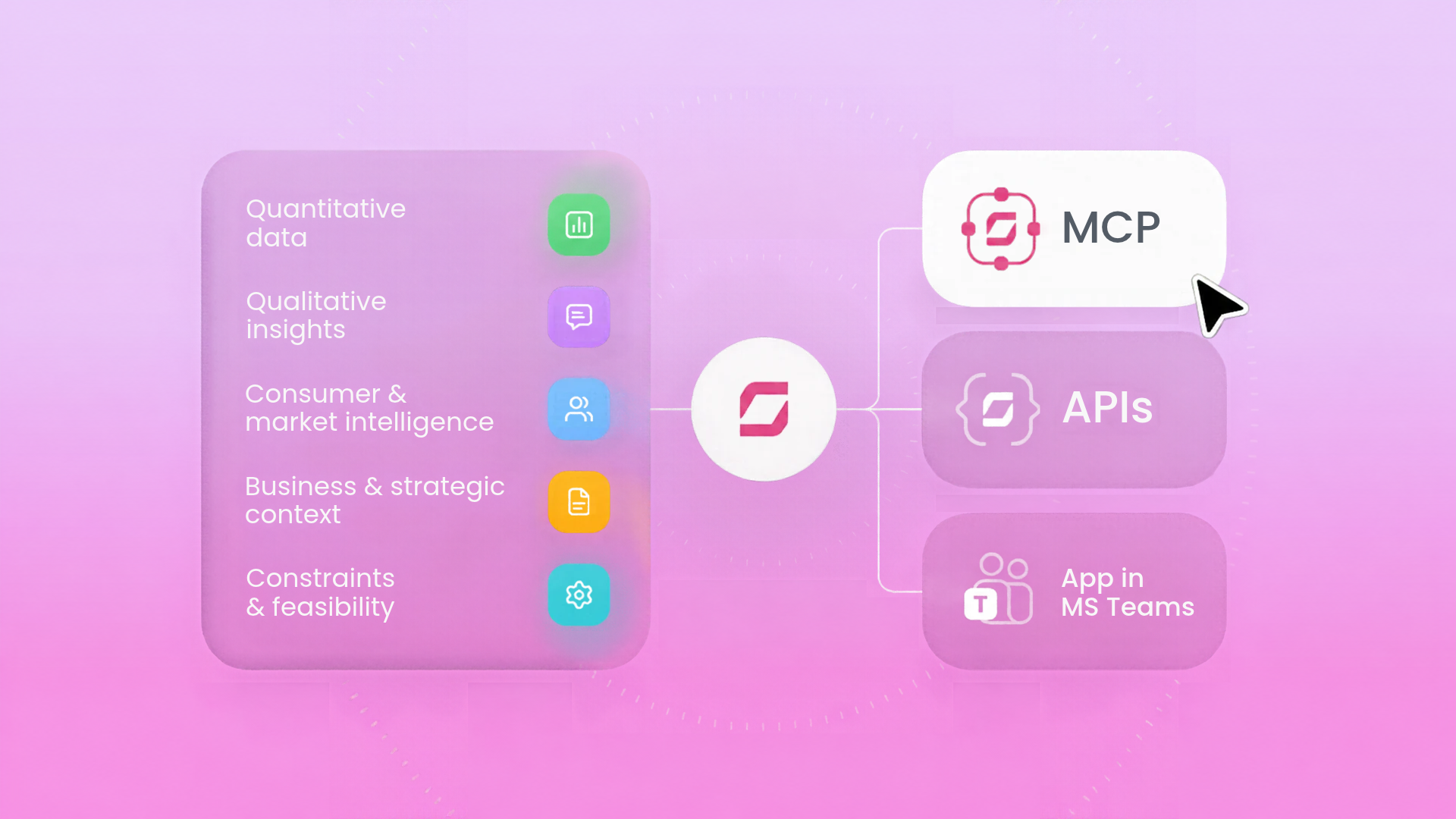
Stravito MCP brings your organization's trusted research and consumer insights into the AI tools your stakeholders already use, such as Microsoft Copilot, ChatGPT and Claude. The goal is to make those tools consumer-aware and grounded in your business context.
When an AI agent connects to Stravito through MCP, it's not just getting access to a folder full of documents. It's getting access to the intelligence and capabilities that Stravito has built around your research. For example, features like semantic search, your existing curation, spreadsheet analysis, and the ability to search and interpret charts, graphs and other visuals that market research reports are filled with all carry over.
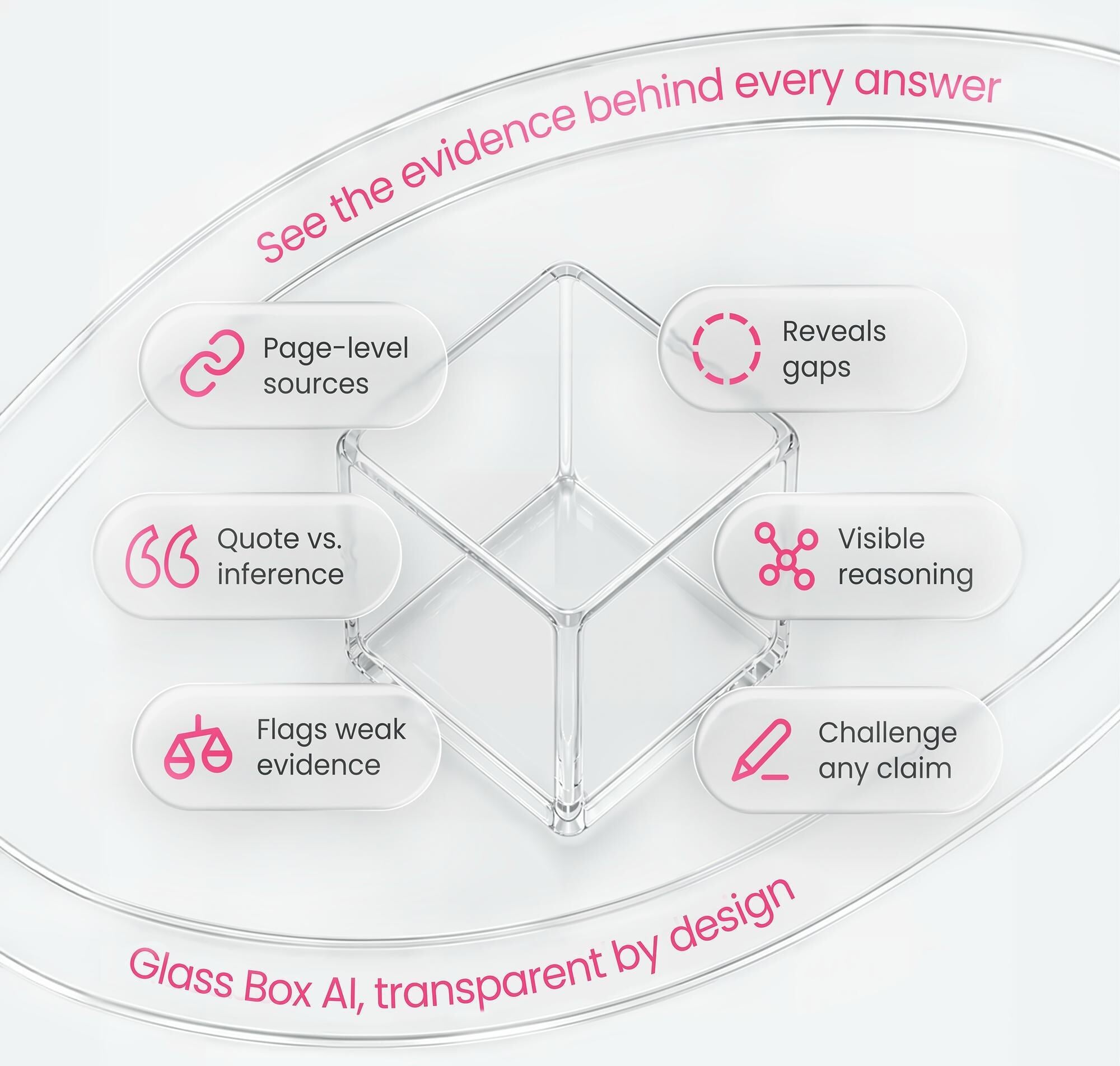
And most importantly, every answer adheres to Stravito's Glass Box AI philosophy. That means it’s drawn from your company's own research, cites its sources, and highlights gaps or conflicting findings.
For marketing and insights teams, Stravito MCP adds up to a few core practical benefits:
- Less time searching and switching: You can keep working in the AI tool you already know, instead of moving between applications and assistants.
- More value from research you've already invested in: Validated, curated studies show up in the answers people actually use, instead of sitting unseen in a library.
- More informed decisions: Answers draw on evidence that reflects your consumers and markets, not just whatever is publicly available.
[Want to see it in action? Watch our free MCP masterclass here]
FAQs
Does Stravito MCP just give AI tools access to our files?
No. AI tools also get Stravito’s capabilities, like semantic search, your existing curation and the ability to interpret charts and visuals. Answers cite their sources and flag gaps or conflicting findings, in line with Stravito’s Glass Box AI principles.
Does ChatGPT or Copilot support Stravito MCP?
Yes. Stravito MCP works in AI environments that support MCP, including Microsoft Copilot, ChatGPT, Claude, and Gemini, as well as custom-built agents. Each one connects to Stravito through a single, governed connection.
Is Stravito MCP secure? Can people see research they don't have access to through Stravito MCP?
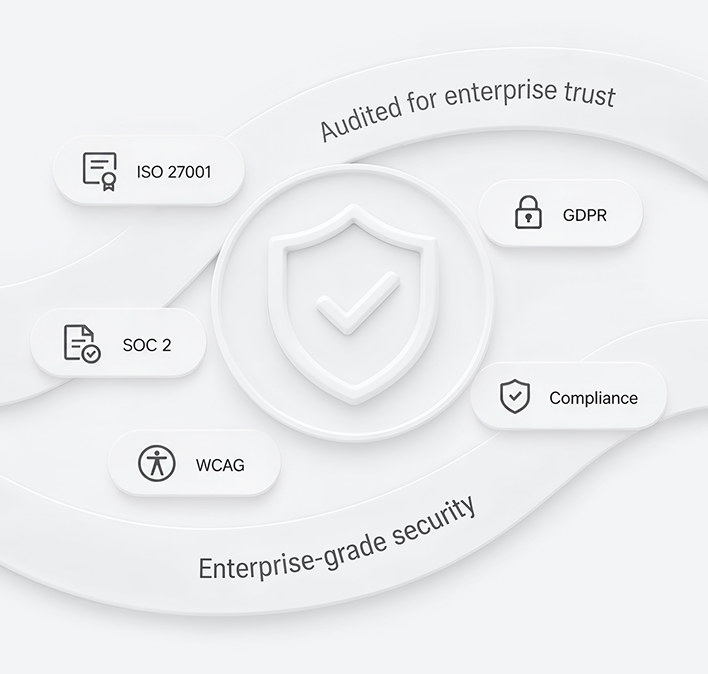
Stravito MCP inherits each user's existing Stravito permissions, so answers are scoped to the person asking. For more on how Stravito protects your data, visit the Stravito Trust Center.
Do we need developers to set up Stravito MCP?
No. Stravito MCP can be enabled by your Account Team. Once it's configured by your IT team in a compatible AI environment, it's ready to use.
Bring trusted consumer intelligence into the tools your teams already use
Your company already has valuable consumer intelligence. With Stravito MCP, your teams can draw on it in every AI conversation, without leaving the tools they already use.
Learn how Stravito MCP brings trusted consumer intelligence into your AI workflows →
Keep reading:
- Stravito launches MCP Server for enterprise AI tools
- How Stravito's Glass Box AI principles enable transparency and trust
- Why more intelligence isn't leading to better decisions


Author