
TL;DR:
- Your BI stack is full. What you need now is a platform that improves decision confidence, not dashboard volume.
- Decision intelligence platforms help teams move faster by connecting data, insights, and human expertise.
- The biggest gaps today are trust, explainability, and adoption, not analytics horsepower.
- Insight-led platforms give your business users the context they need to make decisions they can stand behind.
- Stravito leads this list for global enterprises that want a decision layer grounded in research, evidence, and ease of use.
How many hours did your teams spend last quarter debating whose numbers were right?
If you are like most enterprise leaders, the problem isn’t a lack of dashboards. It’s that your business users still struggle to turn data, research, and reports into aligned, confident decisions.
That’s why businesses like yours are looking at decision intelligence platforms for 2026.
You already have analytics tools. What you need now is a way to bring everything together, reduce noise, and help people move faster with fewer blind spots.
We'll give you a clear view of the best decision intelligence platforms to consider, what they’re good at, where they fall short, and how to choose the right fit for your organization.
We'll also share our perspective because we believe you shouldn’t need technical expertise or complex workflows to understand what your company already knows.
Insight-led decision intelligence platforms like Stravito help your teams explore data, reuse research, and generate insights that support decisions they can stand behind.
Let’s look at why the platform you choose in 2026 will shape the way your teams make decisions.
Why choosing the right decision intelligence platform matters in 2026
Your teams analyze data every day. What slows them down is turning it into decisions the business can trust.
These four ideas explain why the platform you choose next year will shape how your organization decides and acts.
From more data to better decisions
Most enterprises have plenty of analytics. What they lack is alignment.
Teams often toggle between dashboards, research decks, and shared folders, trying to understand what the business already knows.
A decision intelligence platform helps them connect these pieces so decisions feel clear instead of scattered.
What this looks like in practice
- Less time searching
- Faster clarity
- Fewer conflicting interpretations
Better decisions come from connection, not more charts.
The symptoms of a poor decision stack
If your team is stuck, you’ll see the signs quickly. Three of the most common:
- Numbers that never match
- Insights hidden across tools
- Meetings that circle without landing
These patterns show your issue isn’t analytics. It’s the friction created when information lives in too many places.
When teams cannot find or trust information, decisions slow down.
Where generic AI falls short
AI copilots can speed up tasks, but they rarely understand the full context behind enterprise decisions.
Three core gaps
- No clear evidence trail
- No awareness of your governance rules
- No support for both structured and unstructured data
If your leaders cannot trace the reasoning, they cannot use the recommendation.
Why decision confidence is the new KPI
Executives today push for decisions they can stand behind. That means teams need clear reasoning, visible evidence, and a shared understanding of what supports the recommendation.
Why it matters
- Complex markets demand faster judgment
- Stakeholders expect transparent logic
- Teams need confidence before they act
When everyone can see how a recommendation was formed, decisions move forward with fewer doubts.
With this foundation in place, let’s look at the best decision intelligence platforms to consider for 2026.
The 19 best decision intelligence platforms to use in 2026
If you are comparing the best decision intelligence platforms for 2026, you want a quick, clear view of what each tool actually does.
This list gives you that. It highlights the best decision intelligence tools, the types of decisions they support, and where they fit inside a modern enterprise stack.
You will see a mix of decision intelligence software, rules engines, analytics platforms, and insight-led options like Stravito. Each one helps teams make better decisions in different ways, from automation to research reuse to predictive analytics.
If you are choosing a data-driven decision intelligence platform or shortlisting the best decision intelligence software for an RFP, use this section as your starting point.
Let’s get into the tools.
1. Stravito - Best for insight-led decision intelligence in global enterprises
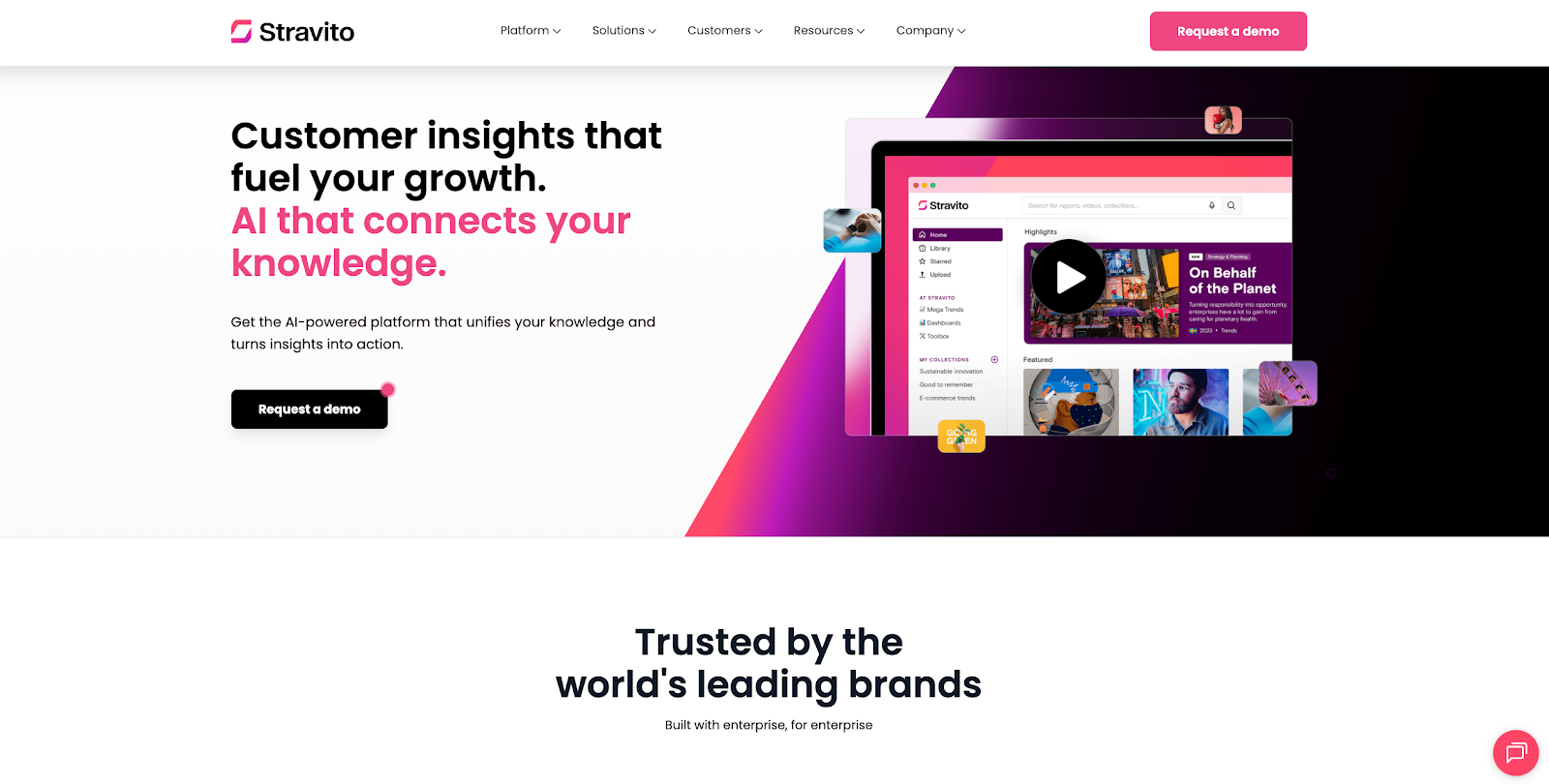
Stravito is an insights management and decision intelligence platform that turns siloed research and market intelligence into faster, more confident decisions across large organizations.
Overview
Stravito is built for enterprises that generate high volumes of research, customer intelligence, and market insights across teams and geographies.
It supports both everyday and strategic decision-making. The platform helps your business users explore data, reuse insights, compare sources, and generate insights with clear evidence. S
Stravito works alongside your BI and analytics stack, not in place of it.
Where it shines
- Optimized for insights-rich environments such as CMI, UXR, and Strategy
- Works out of the box with existing business intelligence tools without a heavy IT lift
- The GenAI Assistant synthesizes studies into decision-ready summaries with source links
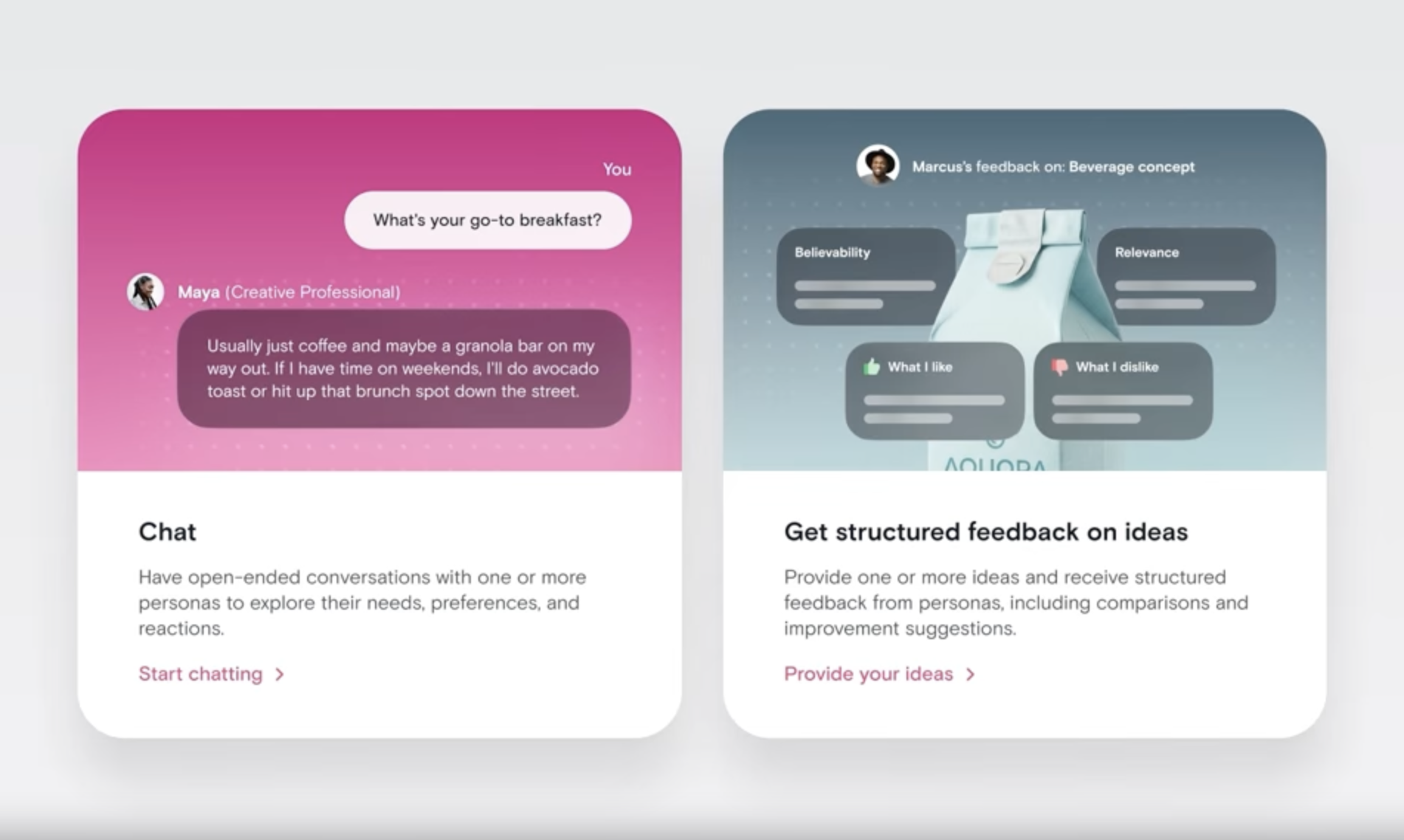
- Collections, digests, and AI personas help the right teams see the right information at the right moment
Where it may fall short
- Not designed for large-scale predictive modeling or machine learning pipelines
- Does not replace traditional BI dashboards or advanced analytics tools
Perfect for
Global enterprises that want a decision intelligence layer grounded in research and insights rather than only numbers.
See how Stravito fits on top of your BI stack and helps teams make confident, evidence-backed decisions. Request a Stravito demo
2. Aera Technology - Autonomous decision intelligence for supply chain and operations
Aera Technology offers an AI-driven decision intelligence platform that automates and augments real-time operational decisions across global supply chains.
Overview
Aera is built for large enterprises that manage complex supply chains, logistics, procurement, and inventory decisions.
It connects to ERP and operational systems, uses artificial intelligence to analyze data continuously, and recommends or executes actions to improve responsiveness, cost, and service levels.
Where it shines
- Strong focus on supply chain, procurement, and inventory decisions
- Real-time analysis and predictive modeling for operational disruptions
- Automation capabilities that can execute certain decisions end-to-end
Where it may fall short
- Requires strong data integration and operational readiness
- Not designed for insights management, research reuse, or qualitative evidence
- Best for operational decisioning, not strategic or cross-functional insight workflows
3. FICO Platform - Rules-driven decisions for risk, finance, and compliance
FICO Platform combines analytics, machine learning, and decision rules to support high-volume, high-stakes decisions in financial services.
Overview
FICO is designed for organizations that need precise, auditable decision logic for credit, fraud, collections, and regulatory compliance. It blends predictive models with business rules management to ensure consistent, explainable decisions.
Where it shines
- Industry-leading decision rules for credit and risk
- Strong support for regulatory compliance and auditability
- Scales well for automated, high-volume operational decisions
Where it may fall short
- Built primarily for finance and risk use cases, not general enterprise insights
- Strong modeling capabilities, but heavier implementation than lighter DI tools
4. Domo - BI-led decision intelligence with real-time dashboards
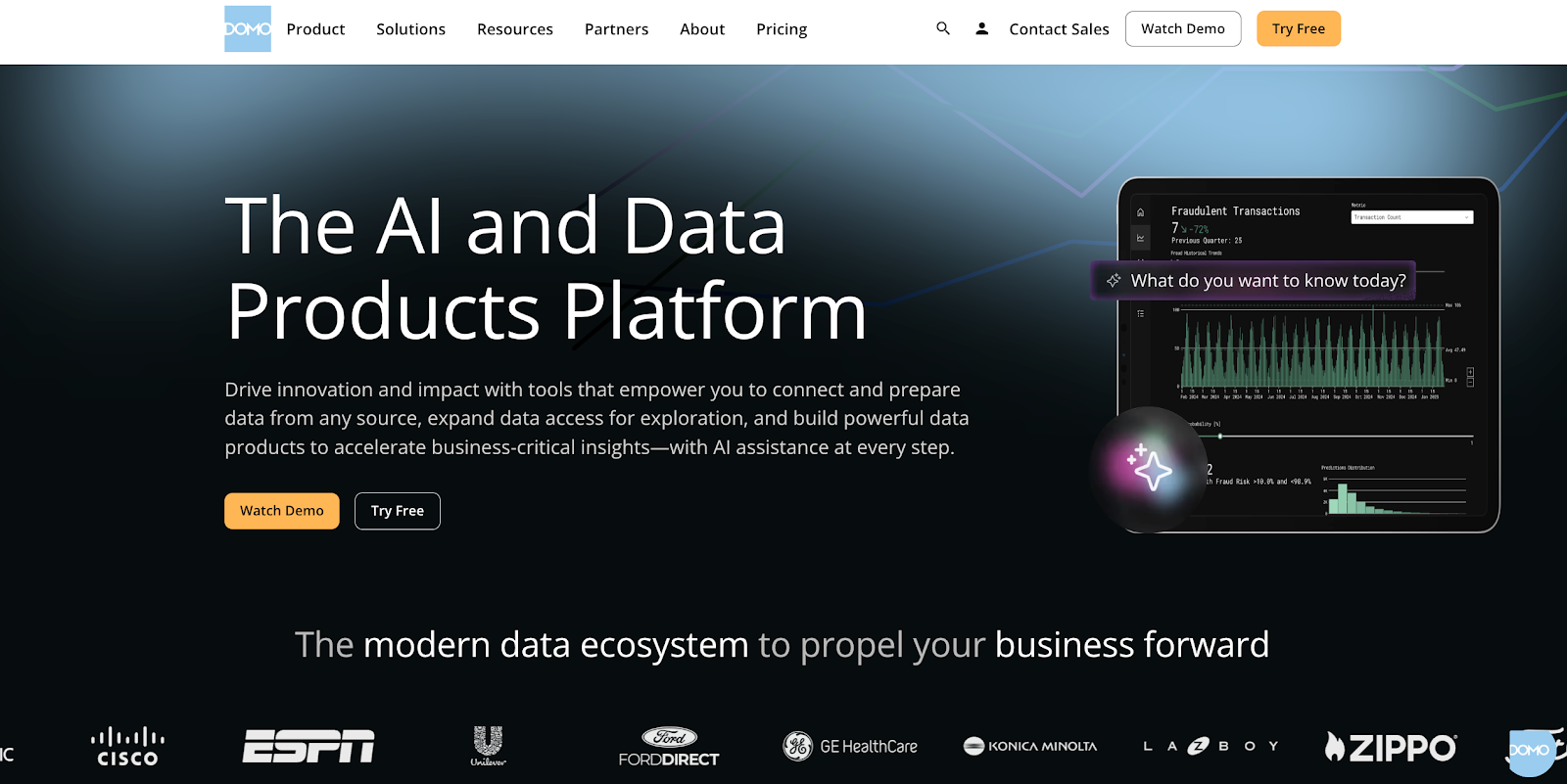
Domo is a cloud-based business intelligence platform that connects data, dashboards, and workflows in one place for fast analytics and operational decisioning.
Overview
Domo is designed for teams that rely on real-time dashboards and need to analyze data across many systems. It supports operational and performance decisions through visual analytics and built-in automation.
Where it shines
- Strong real-time dashboards and data visualizations
- Large library of connectors for fast data integration
- Workflow and alerting tools for operational decisions
Where it may fall short
- Less suited for qualitative insights or complex research reuse
- Can become dashboard-heavy without improving decision workflows
5. Qlik - Active intelligence and analytics automation
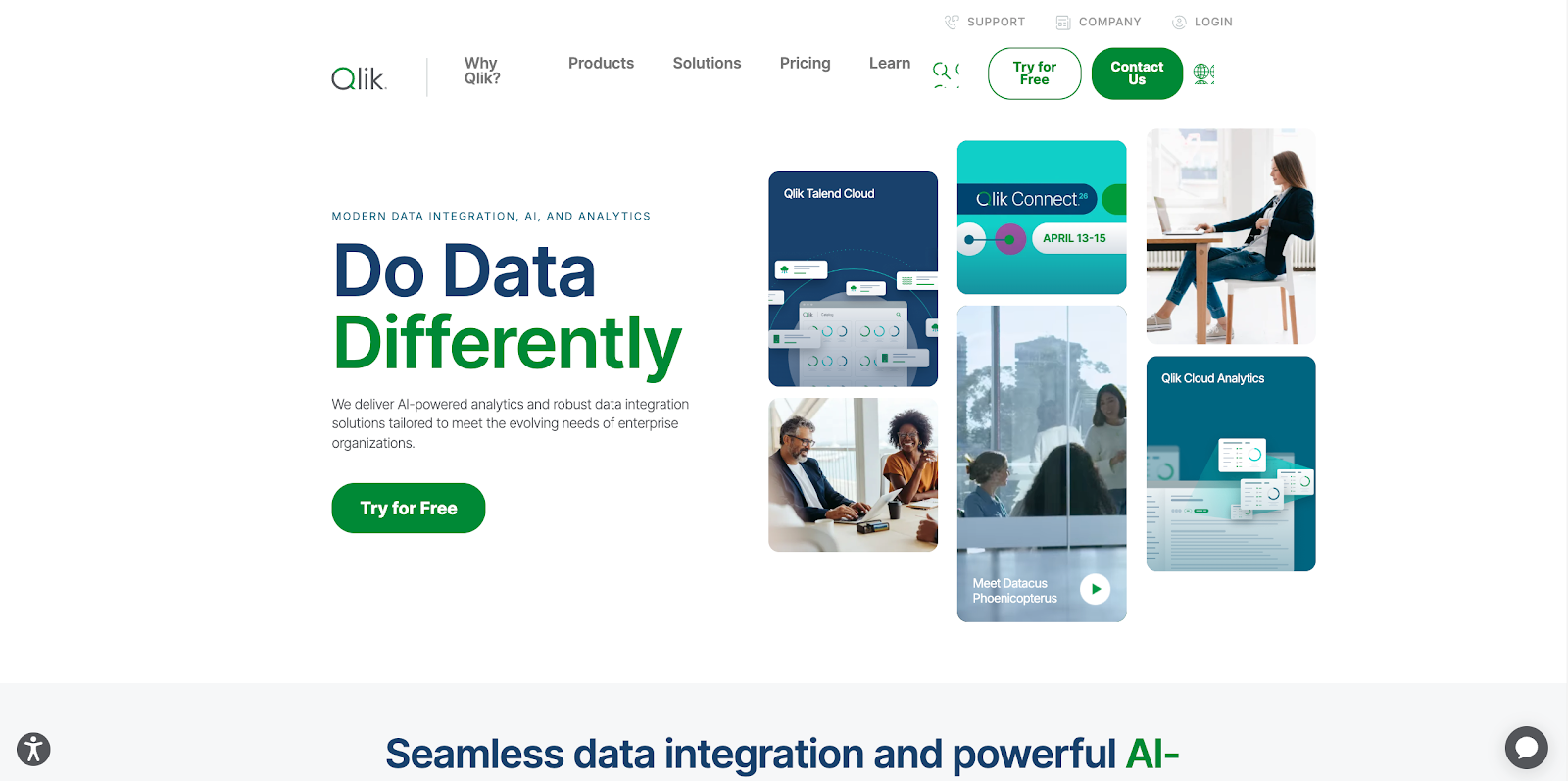
Qlik provides analytics, automation, and machine learning to support continuous, data-driven decision-making across the enterprise.
Overview
Qlik is built for organizations that want end-to-end analytics, from data integration to visualization. Its active intelligence model helps teams make decisions using current, refreshed data rather than static dashboards.
Where it shines
- Strong data integration and transformation
- Automation for analytics and alerts
- Good for operational and analytical decision-making
Where it may fall short
- Limited focus on insights management and qualitative evidence
- Requires technical expertise for more complex setups
6. Microsoft Power BI + Fabric + Copilot - Decision support within the Microsoft ecosystem
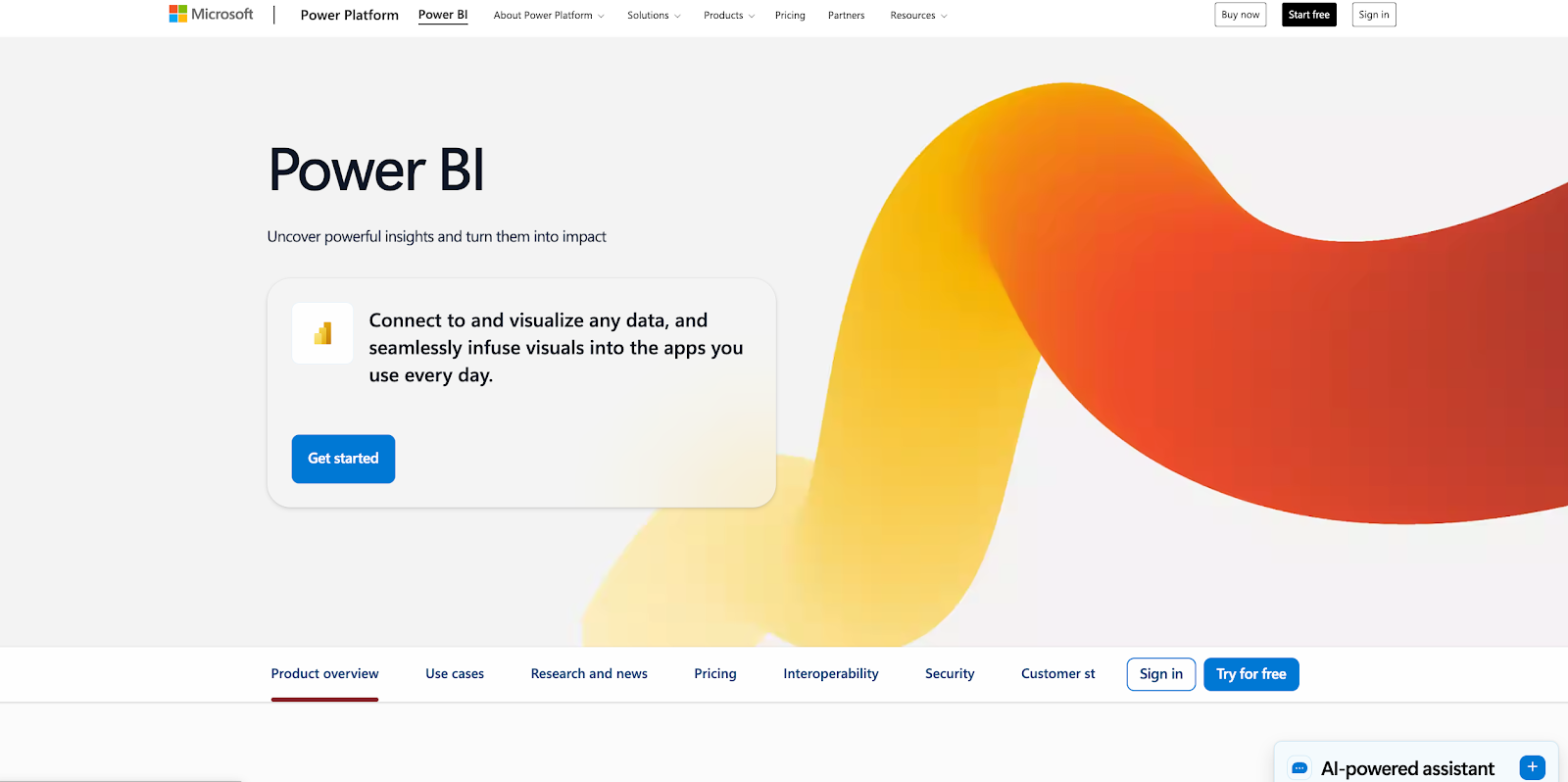
Power BI combined with Fabric and Copilot brings analytics, machine learning, and AI-driven insights into one integrated Microsoft experience.
Overview
This stack is ideal for enterprises already invested in Microsoft. It supports analytical, financial, and operational decisions by centralizing data and using AI to help users analyze data and build models.
Where it shines
- Deep integration across Microsoft 365 and Azure
- Strong data modeling and visualization
- Copilot accelerates analysis for non-technical users
Where it may fall short
- Not a dedicated insights or research platform
- Can become complex without strong governance and data quality
7. Google Looker + Gemini - Analytics-led decision intelligence in Google Cloud
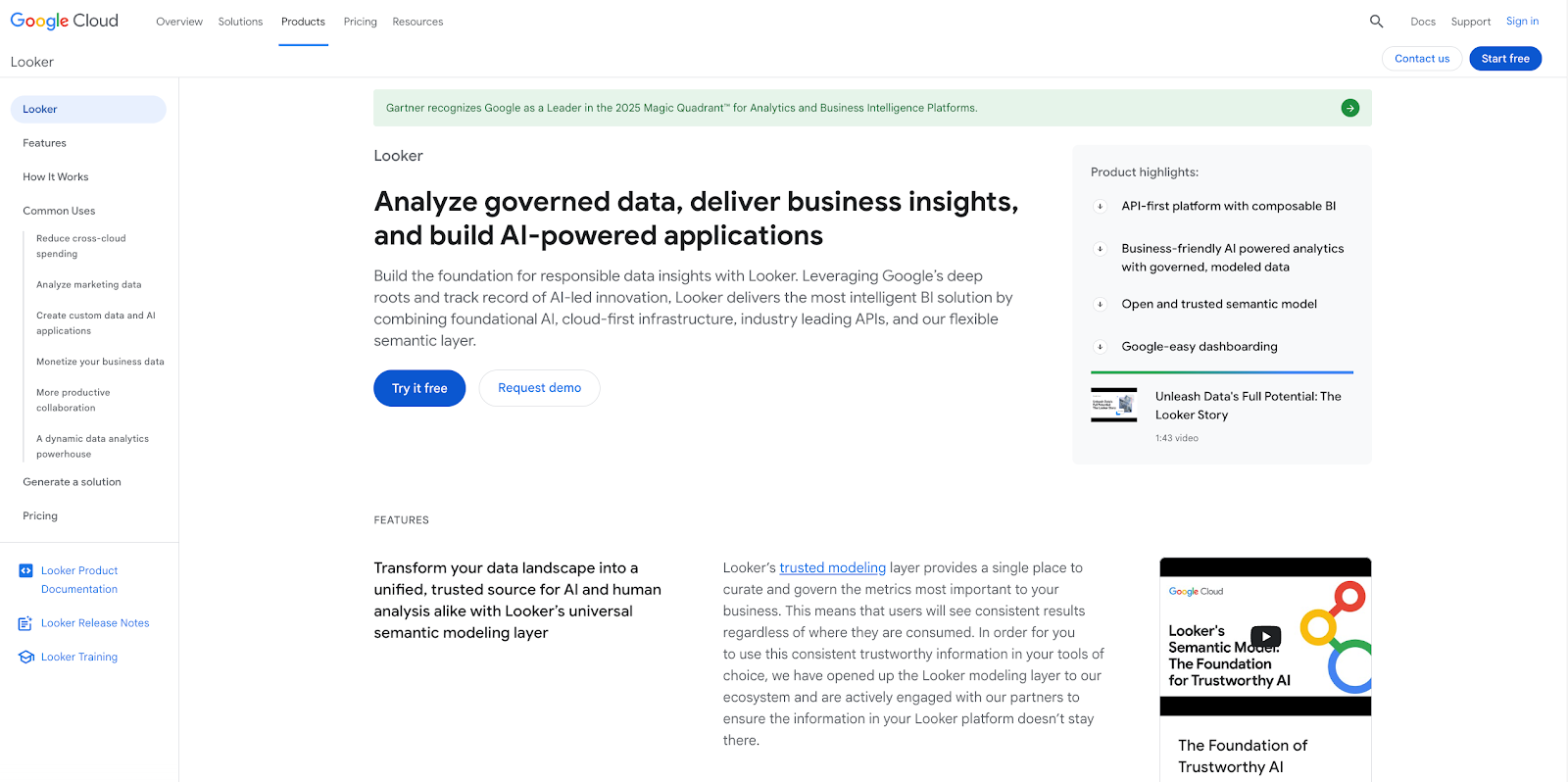
Looker with Gemini LLMs brings modeling, analytics, and conversational insights into Google Cloud.
Overview
Looker is suited for enterprises with strong analytical maturity. It supports metric-driven decisions through unified semantic models, while Gemini provides conversational access to data for business users.
Where it shines
- Clear, consistent metrics across data sources
- Strong in analytical and financial decision-making
- Gemini improves accessibility for business users
Where it may fall short
- Not designed for qualitative or research-driven decisions
- Best suited to teams fully committed to Google Cloud
8. Decisions + Processmaker - Low-code workflows and automated decision logic
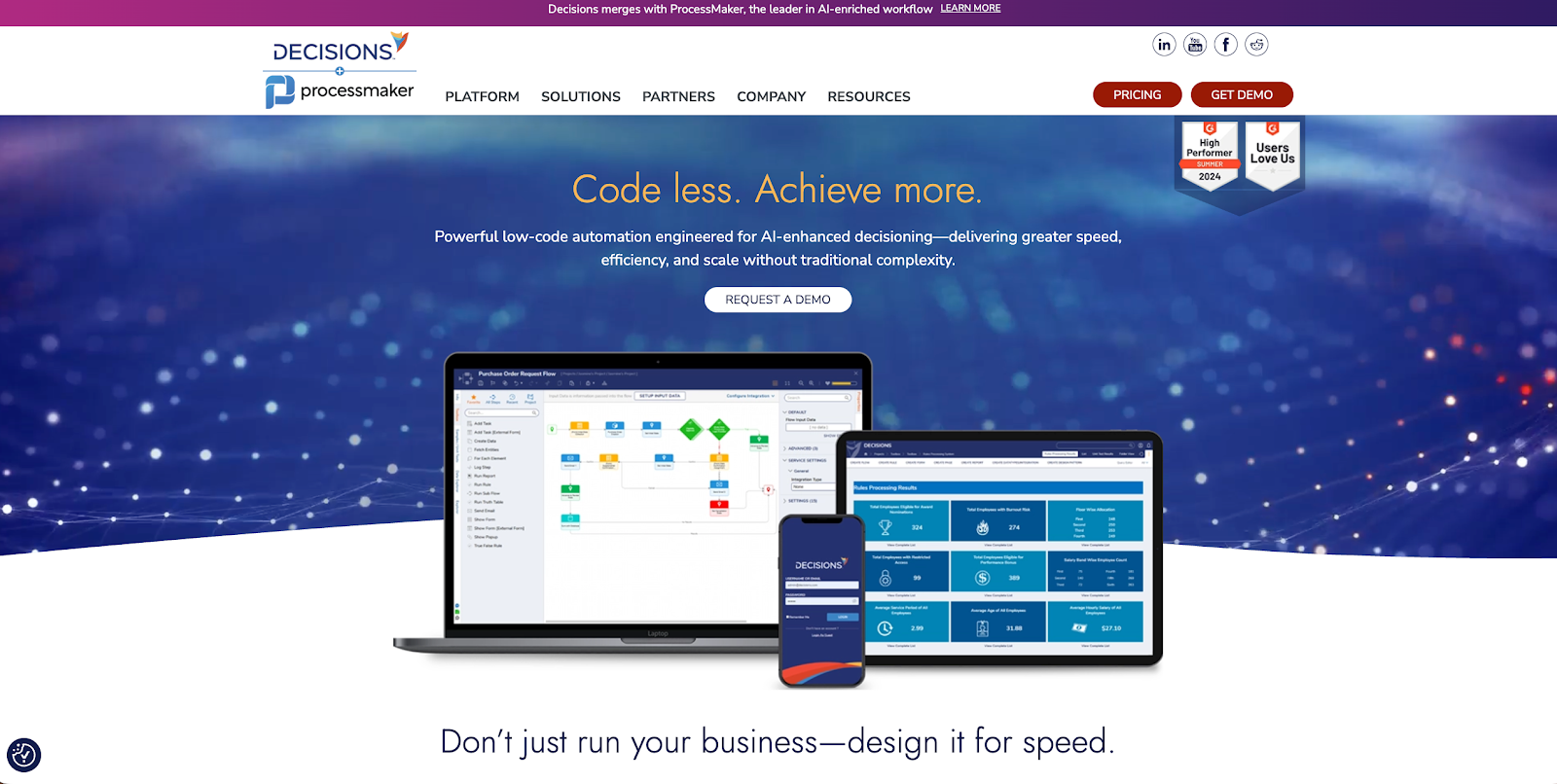
Decisions (now merged with Processmaker) is a low-code platform for designing and automating business rules, workflows, and operational decisions.
Overview
Decisions is built for enterprises that need to streamline operational decisions, approvals, and business rules without heavy development. It supports compliance, routing, and process automation.
Where it shines
- Strong business rules management
- Low-code workflow design
- Good for operational and compliance-focused decisions
Where it may fall short
- Limited analytics and no insights management
- Not a fit for strategic, research-led decision-making
9. Cloverpop - Behavioral decision support for more consistent team decisions
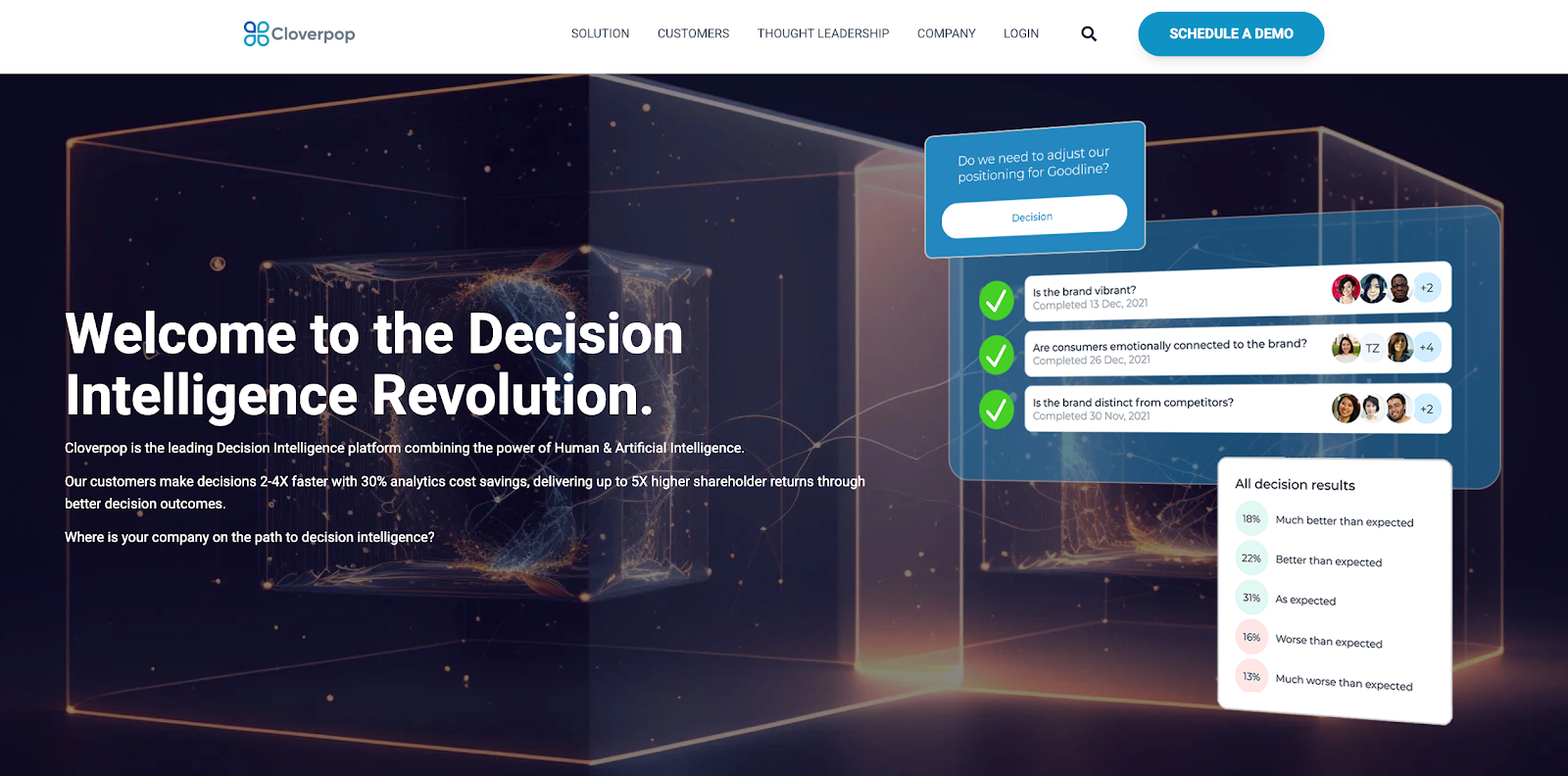
Cloverpop helps organizations improve decision consistency using behavioral science, structured decision processes, and team alignment tools.
Overview
Cloverpop is designed for organizations that want to reduce bias and improve transparency in team-based decisions. It captures inputs, analyzes patterns, and tracks decision outcomes over time.
Where it shines
- Strong focus on decision quality and bias reduction
- Structured templates for team decision processes
- Analytics for tracking and improving decision outcomes
Where it may fall short
- Limited analytics and no deep data integration
- Not built for large-scale operational or research-driven decisions
10. Nected - Rules-based decision automation for mid-market teams
Nected offers a no-code rules engine for automating operational decisions and workflows.
Overview
Nected is best for mid-market organizations that need a simple, fast way to automate decisions using business rules, scoring, and triggers. It supports operational decisions across support, compliance, and internal workflows.
Where it shines
- Easy rules setup without development
- Rapid automation for operational decisions
- Good fit for mid-market teams
Where it may fall short
- Limited analytics and no predictive modeling
- Not ideal for enterprise-scale or insight-heavy environments
11. IBM watsonx - Decisioning with AI, data governance, and predictive models
IBM watsonx is an AI and data platform for predictive analytics, governance, and model-based decisioning.
Overview
watsonx supports enterprises that need governance, predictive modeling, and AI-assisted decision support across regulated industries.
Where it shines
- Strong data governance and regulatory compliance
- Predictive analytics for complex decisioning
- Flexible AI tooling for enterprise teams
Where it may fall short
- Requires technical expertise
- Not focused on insights or research-driven decision workflows
12. DataRobot - Predictive modeling and machine learning for enterprise decisions
DataRobot provides an AI and machine learning platform that helps enterprises build predictive models to support data-driven decisions at scale.
Overview
DataRobot is suited for organizations that rely on predictive analytics, forecasting, and scenario modeling to guide operational and strategic decisions. It automates model creation, validation, and deployment.
Where it shines
- Automated machine learning for forecasting and prediction
- Strong model governance and monitoring
- Useful for operational and financial decisions that rely on future outcomes
Where it may fall short
- Not built for qualitative insights or research management
- Requires data science maturity to get full value
13. TIBCO Spotfire - Analytics and visual decision support for technical teams
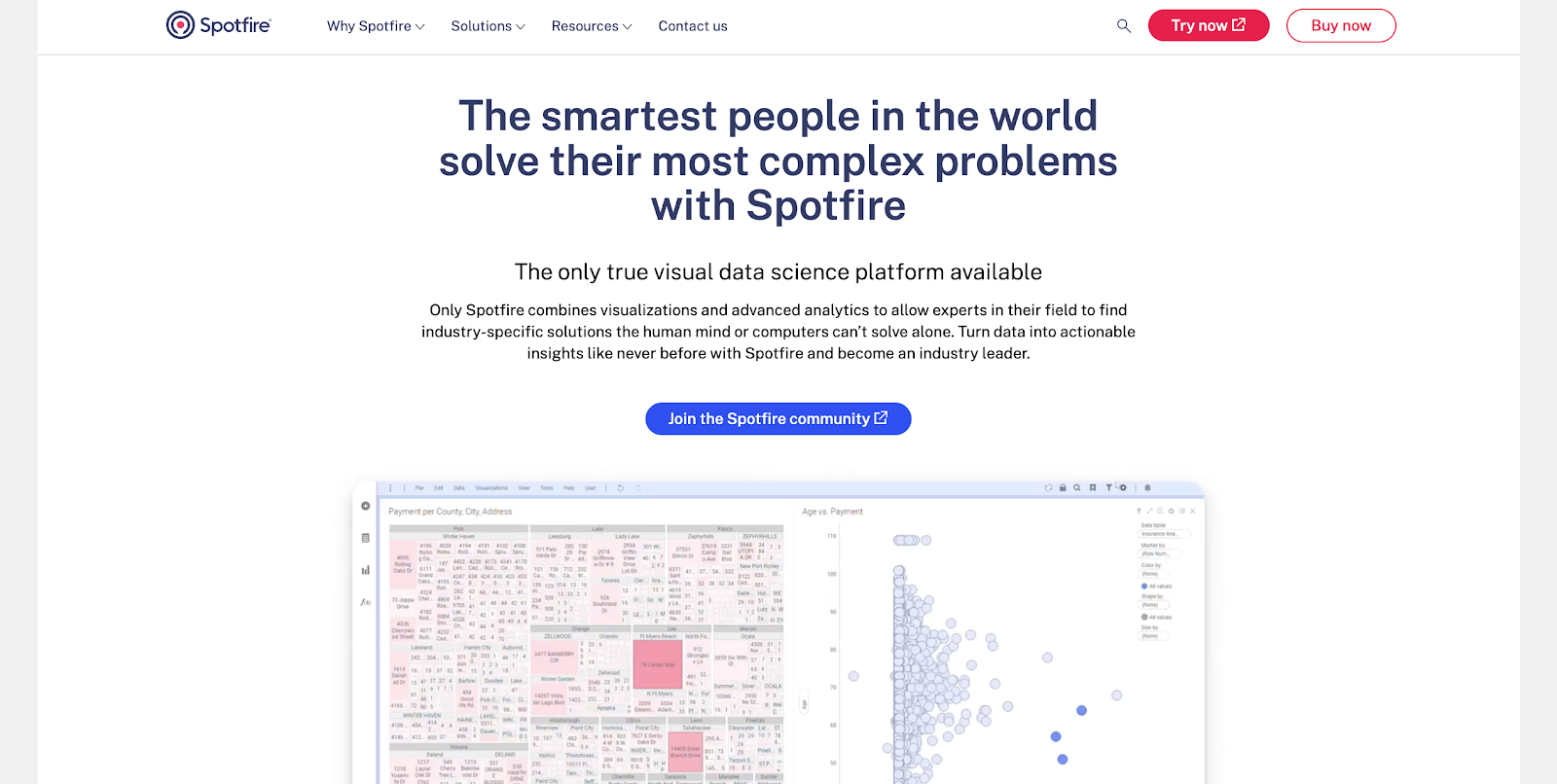
Spotfire is an advanced analytics and visualization platform that helps teams explore data and uncover patterns for faster decision-making.
Overview
Spotfire is built for technical and analytical teams that need to analyze complex data, run simulations, and support scientific, operational, or industrial decisions.
Where it shines
- Strong visualization and exploratory analytics
- Good support for real-time and IoT data
- Useful for operational and industrial decision-making
Where it may fall short
- Less accessible for non-technical users
- Not designed for insights or cross-functional research workflows
14. H2O.ai - Open-source machine learning for predictive decisioning
H2O.ai offers open-source and enterprise machine learning platforms used to build predictive models for risk, fraud, pricing, and operational decisions.
Overview
H2O is designed for data scientists and analytics teams that need customizable, scalable predictive models to support high-value decisions in finance, insurance, and operations.
Where it shines
- Strong machine learning automation and flexibility
- Good for predictive and prescriptive analytics
- Supports high-scale modeling across many data sources
Where it may fall short
- Requires significant technical expertise
- Not a fit for insights, qualitative inputs, or everyday decision workflows
15. Alteryx - Self-service analytics and automated decision support
Alteryx provides analytics, automation, and low-code workflows that help teams analyze data and support operational decisions.
Overview
Alteryx is built for teams that need to automate data preparation, run analytics, and support decisions through repeatable workflows without deep coding experience.
Where it shines
- Easy-to-use workflows for automating analytics
- Good for operational decisions that rely on data preparation
- Useful for teams transitioning from manual reporting
Where it may fall short
- Not designed for research or insights-led decision-making
- Can become complex when scaling to enterprise-wide governance
16. ThoughtSpot - Search-based analytics for fast decision support
ThoughtSpot lets users ask natural-language questions to analyze data and uncover insights for quick decisions.
Overview
ThoughtSpot is ideal for enterprises that want business users to explore data directly using search without relying on dashboards or analysts.
Where it shines
- Natural language search for fast insights
- Strong for operational and sales decisions
- Good accessibility for non-technical users
Where it may fall short
- Limited support for research, qualitative insights, or broader decision workflows
- Works best when data models are already clean and well-governed
17. SAS Viya - Enterprise analytics, forecasting, and decisioning
SAS Viya provides cloud-native analytics, forecasting, and decisioning capabilities for enterprise teams.
Overview
SAS Viya is built for organizations that require advanced analytics, statistical modeling, and governance to support financial, operational, and risk decisions.
Where it shines
- Strong statistical models and forecasting
- Good governance and regulatory support
- Useful for financial, risk, and operational decisioning
Where it may fall short
- Requires analytical expertise
- Not built for insights-led or qualitative decision processes
18. Salesforce Einstein - AI-powered decision support for sales and customer operations
Salesforce Einstein provides predictive insights, scoring, and recommendations across Salesforce applications.
Overview
Einstein supports customer-facing and operational decisions by predicting churn, surfacing next-best actions, and analyzing customer interactions.
Where it shines
- Strong for customer-facing decisions in sales and service
- Native integration within Salesforce
- Helps teams act on real-time customer data
Where it may fall short
- Limited beyond CRM and customer operations
- Not suited for research-driven or strategic decision workflows
19. SAP Business Technology Platform (BTP) - Enterprise decisioning built on end-to-end data integration
SAP BTP combines analytics, AI, data integration, and business rules to support enterprise decisions across SAP ecosystems.
Overview
BTP is designed for SAP-driven organizations that rely on integrated financial, supply chain, and operational decisions supported by unified data and rule-based workflows.
Where it shines
- Strong integration across SAP applications
- Business rules and workflow automation for operational decisions
- Supports compliance-heavy environments
Where it may fall short
- Best for SAP-centric companies
- Complex to deploy for teams without strong SAP expertise
These platforms solve different parts of the decision workflow.
Your next step is to match them to the decisions your teams need to improve.
The following framework will help you compare the best decision intelligence platforms that teams are evaluating and choose the right fit for your stack.
How to choose the right decision intelligence platform
Use this framework to compare platforms based on how your teams actually work and how decisions get made in your organization.
Start with your critical decisions
Clarify the decisions you want to improve first. This helps you see which platforms support everyday decision-making rather than adding more dashboards.
Expect to uncover decisions that need clearer evidence or faster alignment.
Map your current stack and gaps
Look at how analytics, dashboards, research, and shared drives fit together. Most gaps happen between systems.
You may see repeated research, slow fact-finding, or conflicting numbers. Our guide to competitive intelligence can help you spot these gaps.
Evaluate AI approach, transparency, and trust
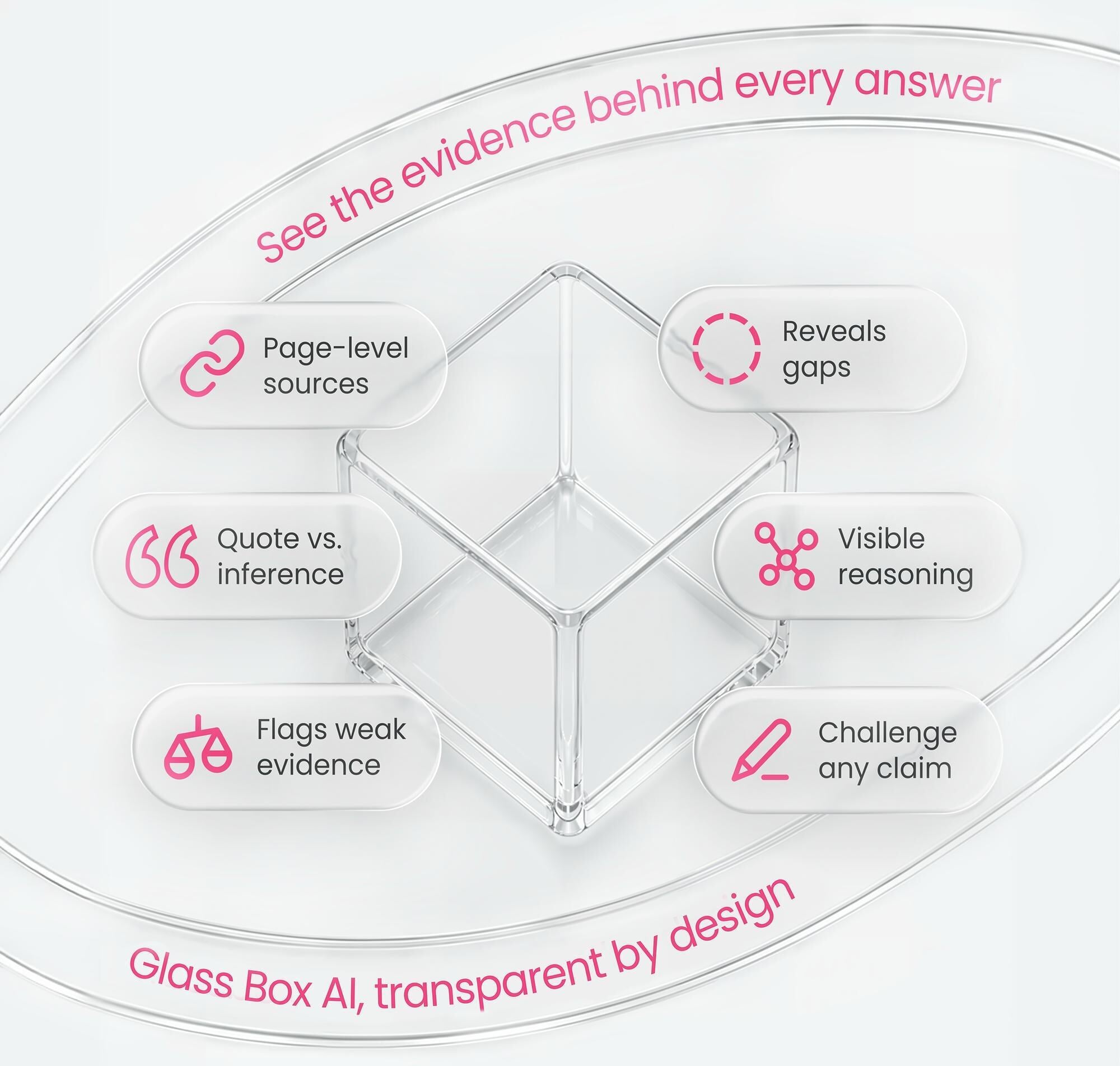
Choose platforms that show their reasoning, evidence, and confidence levels. Black-box answers slow adoption and add risk.
Check coverage for insights, not just data
Most decisions blend data with research, interviews, and qualitative insights. Confirm the platform can handle both.
Insight-led options like Stravito make it easier to reuse studies and avoid duplicated work.
For a business intelligence context, we recommend you take a look at the top SaaS business intelligence tools.
Look at collaboration and decision workflows
Strong platforms support alignment, not just analysis. Look for tools that help teams compare inputs, document reasoning, and move decisions forward.
Confirm governance, security, and compliance
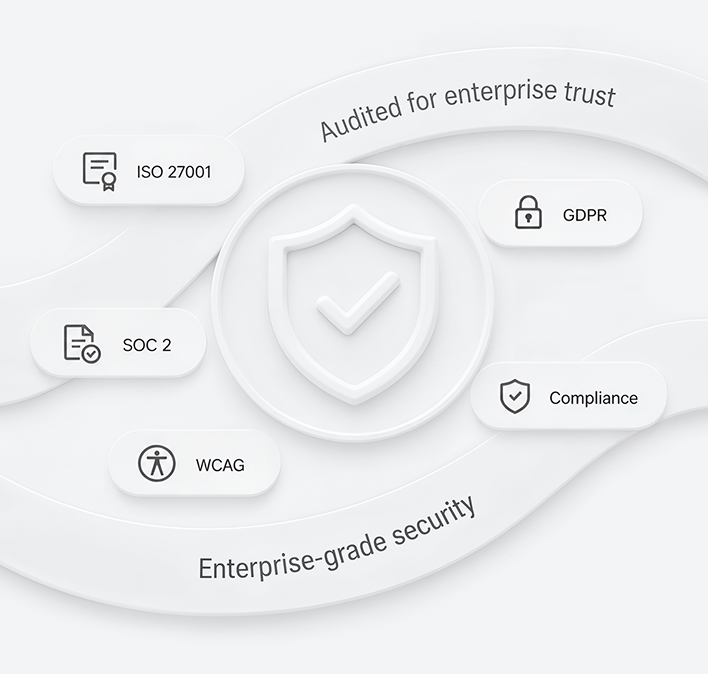
You should quickly eliminate platforms that cannot meet SSO, permissions, audit, and residency requirements. This avoids risk and saves evaluation time.
Prioritize adoption and time-to-value
Business users should be productive within weeks. If navigation feels heavy or training is long, adoption will drop.
Run a focused pilot around a real decision
Test two or three platforms on an actual decision. This shows which one improves speed, confidence, and insight reuse.
For criteria inspiration, see Stravito’s guides to business intelligence strategy and best competitive intelligence tools.
By the end of this process, you’ll know which decision intelligence platforms fit your needs, which ones are too complex, and which ones actually support the way your teams make decisions every day.
With that in mind, here is why Stravito stands out for enterprises that rely on research, insights, and evidence to make confident, aligned decisions at scale.
Why Stravito leads for insight-driven decision intelligence
Stravito stands out because it solves a problem most decision intelligence platforms overlook.
Your teams don’t struggle with analytics. They struggle with finding, trusting, and reusing the insights that shape real decisions.
Stravito turns that hidden knowledge into something your organization can use every day.
Built for insights, not just data
Stravito helps your teams bring research, presentations, interviews, and market intelligence into their decision workflows.
Instead of forcing everything through dashboards, your teams can explore data and insights side by side and make calls with the full context in view.
AI that respects evidence
The AI Assistant summarizes studies, highlights differences, and links back to each source so your teams can understand exactly where insights come from.
Tools like Stravito AI personas help teams see how different audiences think and behave, which supports stronger decisions across marketing, product, strategy, and innovation.
Adoption-first design
Stravito’s simple search, curated Collections, and consumer-grade UX make it easy for non-technical teams to generate insights, compare inputs, and move decisions forward without heavy onboarding or training.
Enterprise-ready from day one
Stravito supports SSO, permissions, governance, and global organizational structures out of the box. It fits next to your BI and analytics stack without a long IT project or complex setup.
Proven to reduce duplicated research
Enterprises use Stravito to cut repeated studies, shorten time-to-brief, and make research reusable across markets and teams.
This helps organizations move faster and make decisions with confidence rather than reinventing the wheel.
Ready to take the next step?
See how Stravito becomes the insight layer that strengthens every decision your teams make.
Turning decision intelligence platforms into real business decisions
The value of a decision intelligence platform shows up in the choices your teams make every day.
When insights are easy to find, AI outputs are explainable, and workflows support alignment, business decisions become clearer and faster across your organization.
Your next steps
- Shortlist the platforms that best support your critical decisions and existing workflows.
- Compare how each tool handles insights, AI transparency, and ease of use for non-technical teams.
- Run a focused pilot to see which platform improves speed, confidence, and evidence reuse in real decision-making moments.
If you want an insight-led platform that helps human decision makers act with confidence, Stravito is built for you. Request a Stravito demo.
FAQs
Author