

TL;DR
An AI Persona is only as good as the research behind it, so it’s essential that you’re able to see what it’s built on. In this article, we break down what a rigorous AI Persona looks like in practice, where AI Personas earn their place, and practical questions to help you evaluate whether or not you can trust the one in front of you.
The moment every insights team knows
Every CMI lead has had the moment. A stakeholder pushes back on an AI-derived insight and asks: "Where did that come from?" There's no clean answer. The tool sounds confident and the output looks polished, but the chain of evidence isn't visible.
As AI Personas become more widely used, the question of how to evaluate their outputs is top of mind for many business leaders, and rightfully so.
Because AI Personas are generative simulations, they are only as good as the research behind them. One built on a rich, recent segmentation study behaves very differently from one built on a thin or outdated library.That’s why transparency is crucial when it comes to AI Personas; you can’t evaluate what you can’t see.
What rigorous AI Personas look like in practice
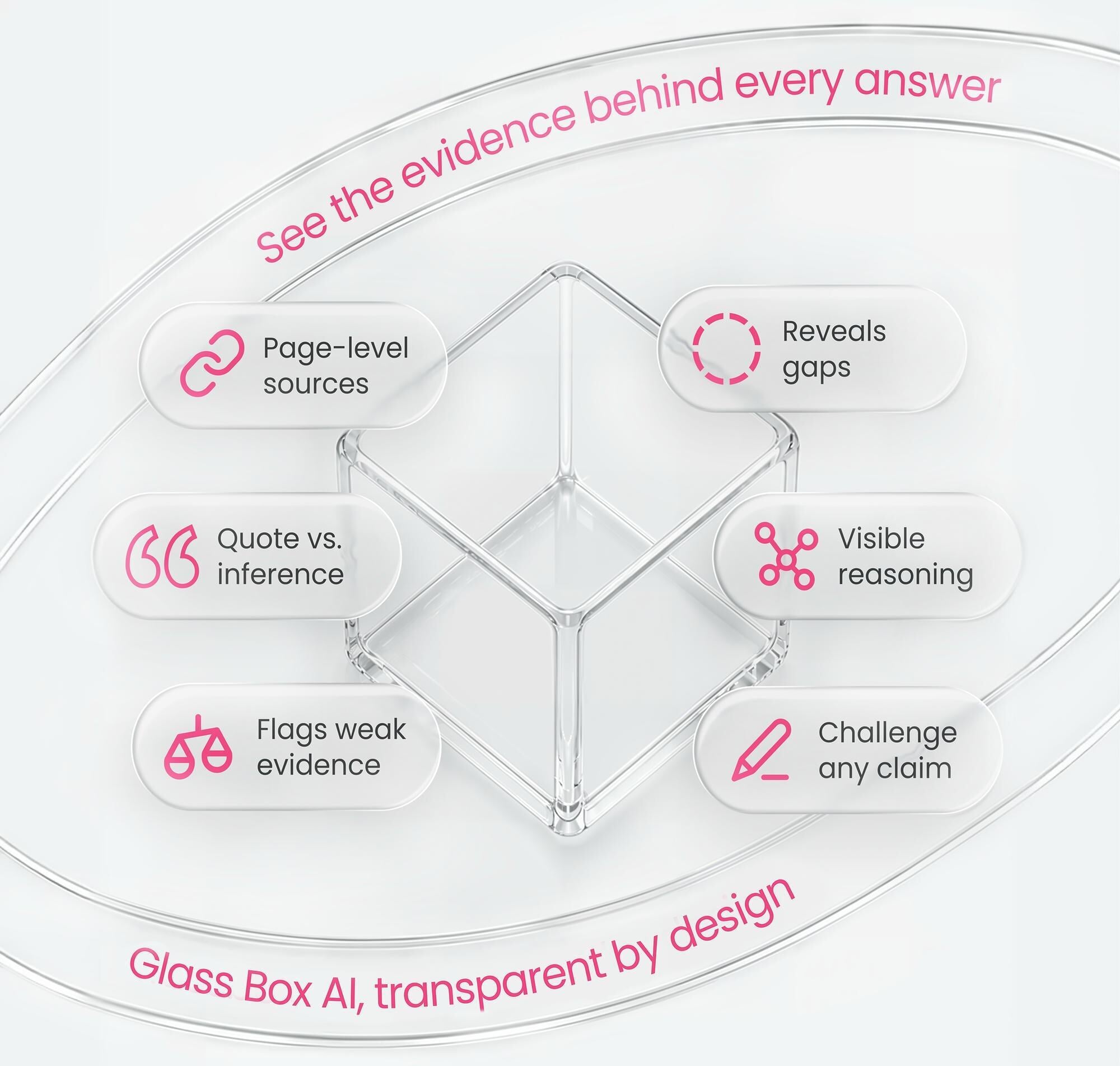
So what does an AI Persona actually look like when it's built to be transparent from the start? At Stravito, we hold every one of our AI products to the same set of principles, the Glass Box: every response traceable, every knowledge gap visible, and you in control of what goes in. Here is how those principles show up in Stravito AI Personas:
Research ownership and control. You choose which research builds an AI Persona. It stays ring-fenced, follows your team's access permissions, and is never used beyond the purpose you define. You set exactly who in your organization can access each file. An AI Persona is also yours to see and adjust: you can inspect exactly what it's built on and fine-tune it as needed. And it lives inside your insights ecosystem, rather than off to the side as another disconnected AI tool.
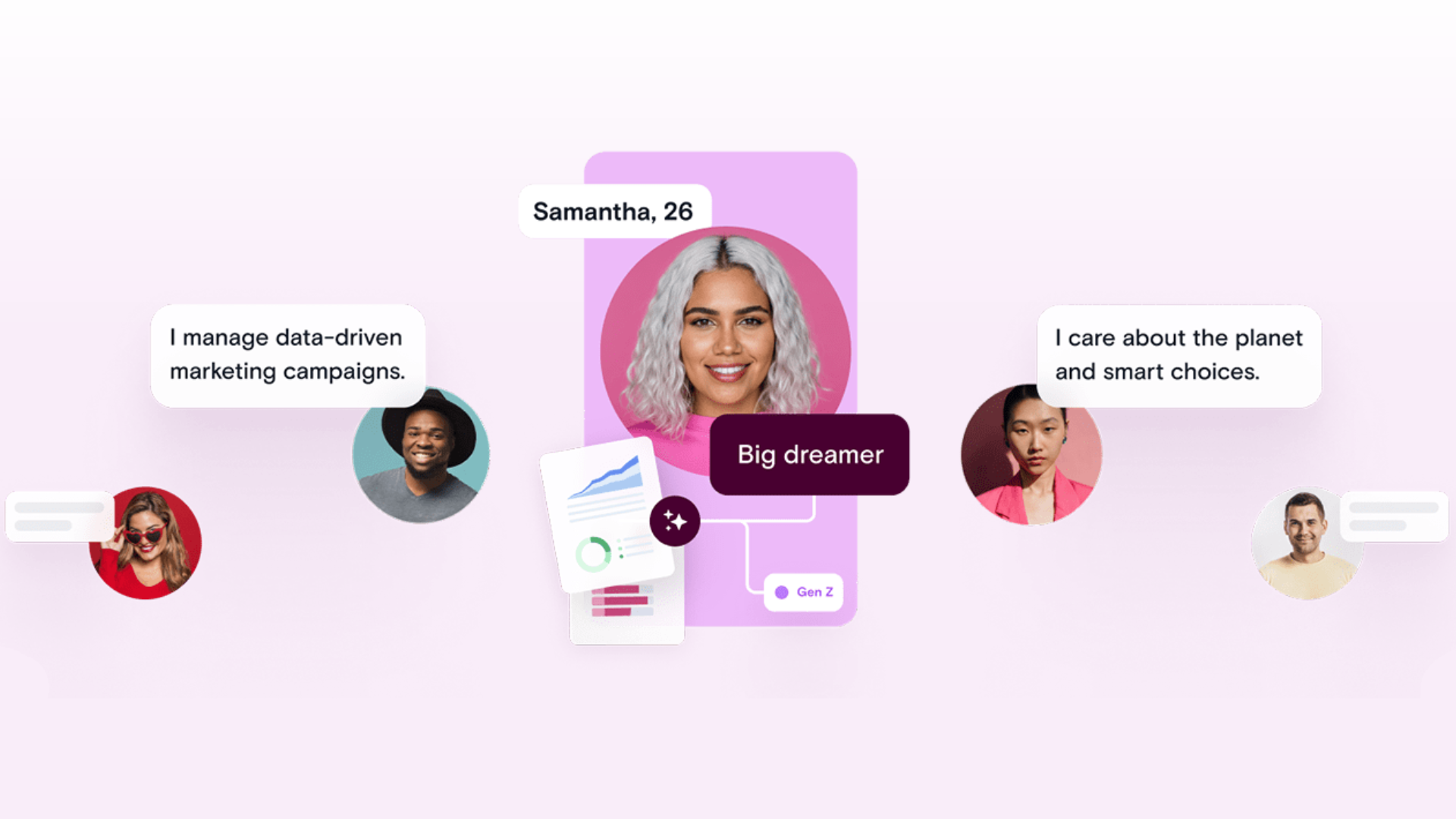
Built on evidence — two layers of research. Every AI Persona is built on two distinct layers. The foundational layer — typically your segmentation study or core research reports — fixes who the AI Persona is: their values, attitudes, motivations, and behaviours. This is the identity layer, and it doesn't change unless the underlying segment definition changes. The second layer is broader market knowledge: category reports, concept tests, trend studies, brand trackers. This defines what they know about their world and can be updated as your research grows. Keeping the two separate holds the AI Persona's character stable while its knowledge keeps up.
Source transparency and traceability. Every response that draws on your research carries a numbered citation. Click it and a panel opens showing the exact source document, the specific section, and the relevant text. If an answer has no citation, that absence is itself information: the AI Persona is reasoning beyond the direct evidence, something you can probe further or treat with appropriate caution.
Honest about its limits. When an AI Persona doesn't know something, it says so, instead of dressing up a guess as insight.
Human expert oversight. Our research and methodology team reviews and stress-tests every AI Persona before it reaches you. We know the failure modes of large language models, and we calibrate every AI Persona against them, so what you receive reflects your segment's real tensions and behaviours rather than a polished average.
Consistency and bias controls. AI tends to agree. Left unchecked, that shows up as smoothing over friction, flattening minority views, and sounding confident even when the underlying data is thin or absent. An AI Persona can also drift from its segment profile into generic AI behaviour, especially in longer conversations. So before every AI Persona reaches you, it's checked for positivity bias, identity drift, demographic stereotyping, and hallucination: the failure modes that make AI outputs unreliable exactly when you need them most.
[Read our in-depth Glass Box AI principles here]
Where AI Personas earn their place
Most everyday business decisions happen without fresh consumer research at all. Time, budget, and operational constraints make it impossible to involve real respondents every time a team needs an answer. So decisions get driven by assumptions, internal opinion, or the loudest voice in the room.
Stress-testing more ideas, earlier
A well-built AI Persona, grounded in high-quality research, can bring evidence-based perspectives into decisions earlier, be systematically stress-tested before committing resources to new research, and be used by more people across the business, not just research-savvy ones. In doing so, it reduces the gap between the research an organization already owns and the decisions it still needs to make.
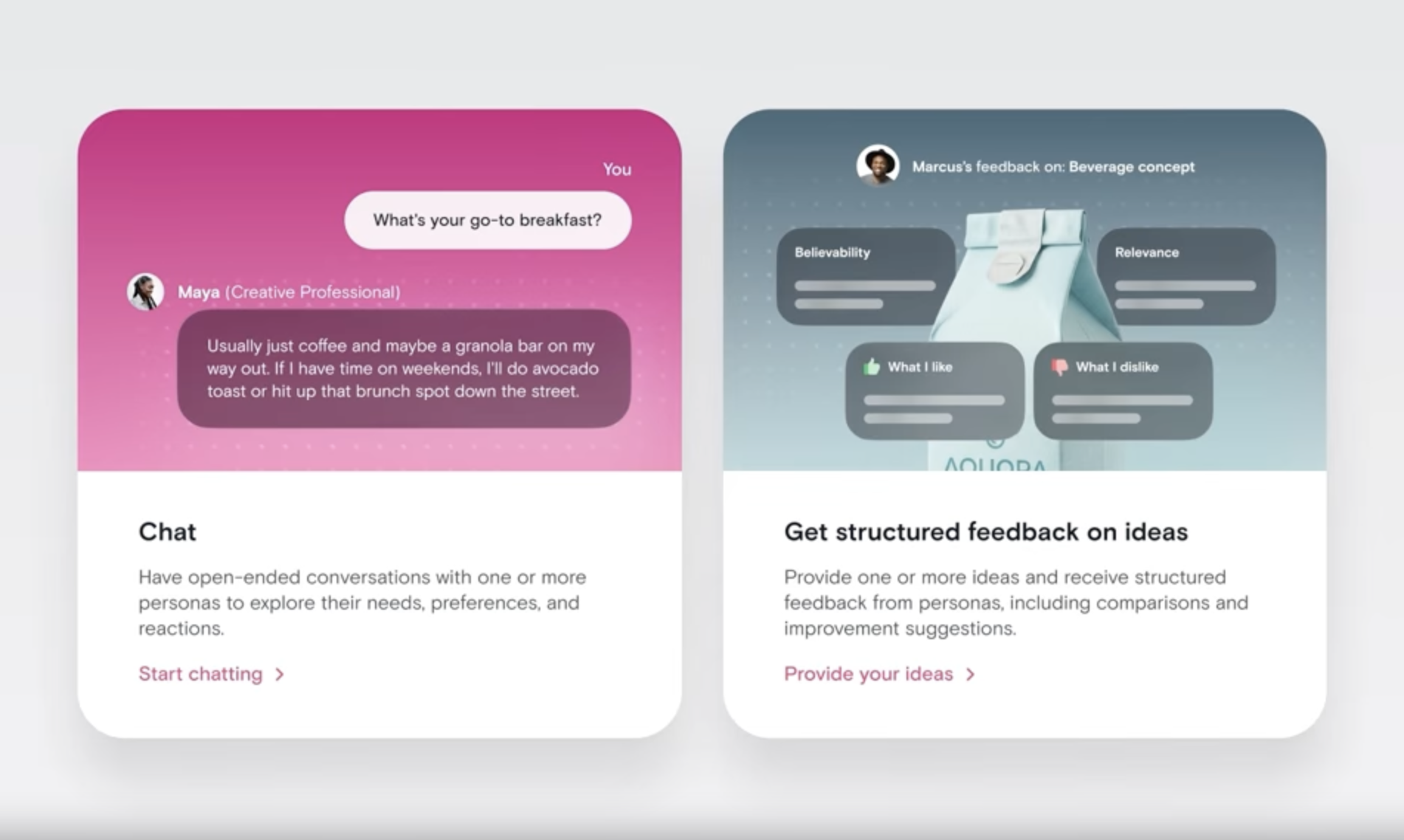
In practice, that changes the rhythm of a team's work. An AI Persona is available on demand, so a rough idea can be pressure-tested the moment it occurs to you, rather than waiting on a fielding cycle. Teams can weed out weak concepts early, before they slip into costly research. You can put the same concept to several segments side-by-side and compare how their reactions differ, the way you would read a focus group. And a well-built AI Persona challenges assumptions with constructive feedback, sparking fresh thinking rather than echoing the status quo. None of this displaces a real study; it fills the long stretches between studies, where most decisions actually live.
Activating the research you already own
An AI Persona is also how you activate the research you've already invested in. For example, most segmentation studies define their segments beautifully, then leave them sitting in a deck: expensive, rigorous, and largely dormant between refreshes. Building an AI Persona on that segmentation turns it into something the whole business can interrogate.
Instead of reading the segment, you can ask it a question. That's the difference between owning segmentation data and putting it to work — moving, in effect, from decks to decisions.
[Read about how Danone stress-tests ideas with AI Personas]
How to evaluate an AI Persona
Now that we’ve established what rigorous AI Personas look like and where they deliver value, here are three questions to help you evaluate real-world solutions:
Where does its knowledge come from, and how recent is it? An AI Persona built on research from three years ago reflects a consumer who no longer exists. The freshness and relevance of the underlying data is the single biggest determinant of output quality.
What happens when you push it beyond its data? Ask it something the research doesn't cover, and watch. Does it admit it doesn't know, or generate a confident-sounding answer anyway? That moment tells you almost everything about how the tool was built.
If a response isn't traceable back to real research, how do you defend it internally? A consumer insight without a source is just an opinion, and in most organizations opinions don't move decisions.Traceability is what takes an AI Persona's output from an assertion to evidence you can act on — including concept testing, further research, or any business decision that needs to hold up to scrutiny.
The bottom line
If rigor is what you're after, validate your own AI Personas against real customer research, in your own business context.
A good vendor makes that easy — offering trials, expert guidance, and a validation methodology so you can test whether an AI Persona holds up for your specific business questions.
What matters most is what you can establish about the specific AI Persona in front of you: where its knowledge comes from, whether it's honest about its limits, and whether you can open it up, trace a claim to its source, and defend it when someone pushes back.
FAQ
What about accuracy percentages for AI Personas?
When vendors publish accuracy figures for AI tools, they're usually measuring something real, but not the thing that matters here. A predictive model trained on millions of historical data points can be tested against known outcomes and given a score. That's a legitimate measure for that kind of tool. But an AI Persona isn't a predictive model; it’s a generative simulation.
Which is why reported accuracy numbers can't be generalized. For example, if a study concludes that an AI Persona matches human respondents with 90% accuracy in one scenario, that doesn't mean the same AI Persona — or even the same technology — will perform equally well for another company, another category, or another business question. Those studies primarily demonstrate that the underlying technology is capable. They don't validate how a specific vendor builds AI Personas, what knowledge they're grounded in, or how well they reflect a particular company's customers. It's those implementation choices that ultimately determine whether the output is genuinely useful.
There's also a more basic mismatch. An AI Persona is a qualitative, generative tool, and like all qualitative tools it has no sample size. Nobody asks "what's the statistical significance of this focus group?" because the question doesn't fit the method. The same applies here: running a thousand responses from one AI Persona doesn't reduce error, it just reflects the same model more times.
Why doesn’t Stravito publish an accuracy score?
The practical danger of a single number is that it manufactures false confidence. "90% accuracy" implies an AI Persona can be the basis for a decision with 90% confidence. That's not how it works. Every AI Persona performs differently, because each is built on different research. A blanket accuracy figure hides that variability entirely, and it says nothing about the one you'd actually be using.
Even at the topic level, accuracy will differ. Ask an AI Persona about something the research doesn't cover and its accuracy will be nowhere near that headline number, because the data simply isn't there.
So a single accuracy percentage reassures without informing. It feels like a reason to trust the tool, but that trust isn't grounded in the quality of the AI Persona you're actually using. What practitioners need is transparency about the AI Persona they're about to rely on: what it knows, how well it knows it, and where its knowledge runs out.
Can AI Personas replace human respondents?
No, human research remains the gold standard for critical decisions. An AI Persona isn’t designed to outperform human research or to replace it where it matters most. That said, a well-built AI Persona, grounded in high-quality research, can bring evidence-based perspectives into decisions earlier, be systematically stress-tested before committing resources to new research, and be used by more people across the business, not just research-savvy ones. In doing so, it reduces the gap between the research an organization already owns and the decisions it still needs to make.

See how Stravito can help your team
The most valuable insights aren’t the ones sitting in a repository. They’re the ones teams can quickly find, trust, and apply when decisions matter most.
See how Stravito can help your organization turn knowledge into business impact.


Author